Spring on the Common
Warblers, oxlips and bluebells

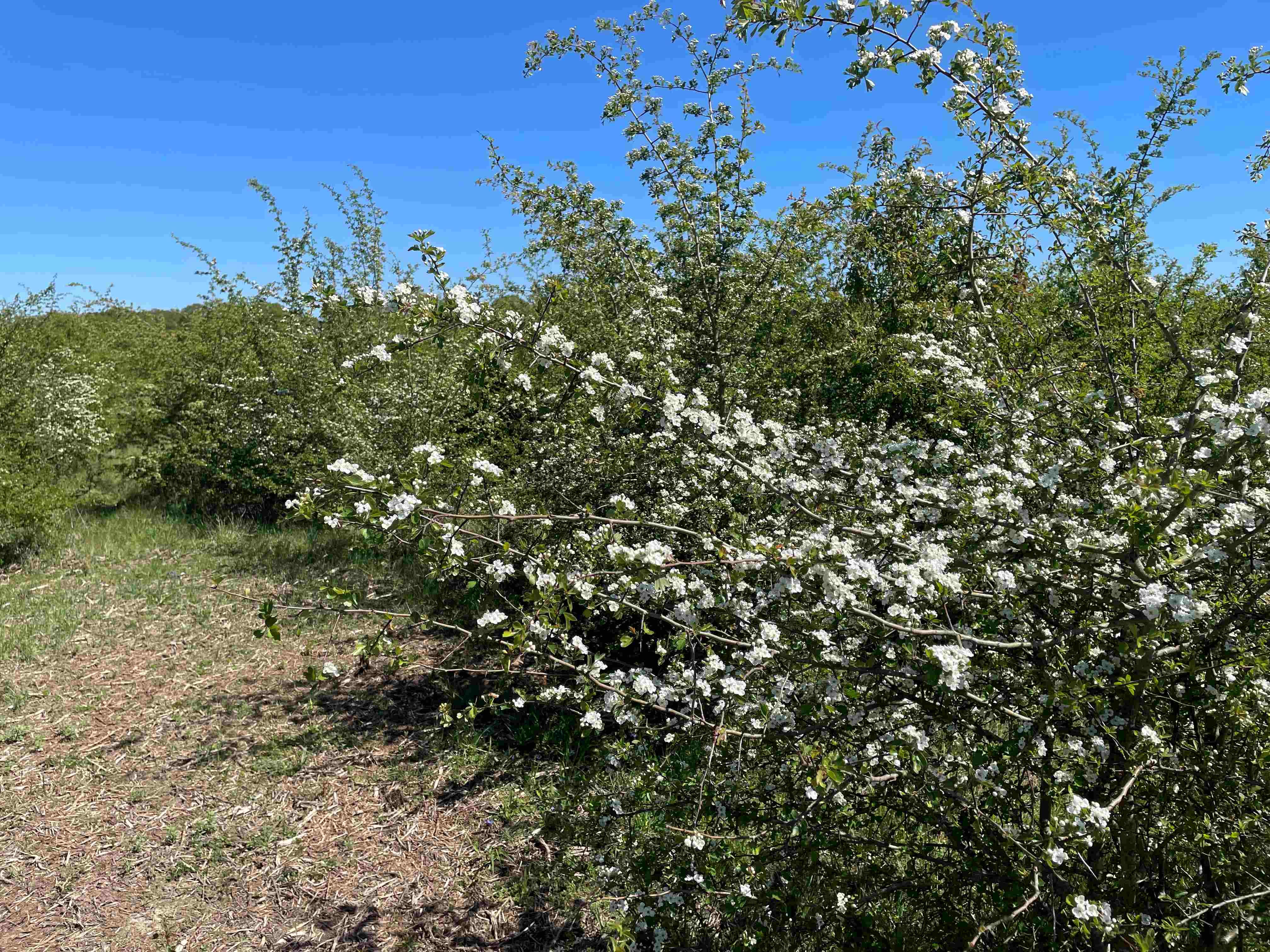
The hawthorn bushes covered in May flowers and loud with birdsong
The Common is at peak springiness, bursting with fresh greenness. I walk out onto Northchurch Common. This is a place of skylarks, making the music of the air, of freedom, the soundtrack of heaven. The larks nest in the rough grass in the big field, protected from disturbance only by National Trust notices. A larks springs up explosively, flaring its tail, chasing another, and, catching the breeze, climbs up to the sky, up, up to a tiny speck, still pouring out its song over the ground.
I think there are probably other birds around but I cannot hear them in the strong wind. In a bay on the edge of a patch of scrub, where the air is still, the bushes are vibrating with song. The little birds are invisible; it is as if the May flowers are singing. They cover the bushes like dollops of soft snow, smelling sour. I lie in a dry grassy hollow, surrounded by a Sleeping Beauty wall of flowering thorns, and a dome of blue sky. The Merlin app tells me the songs; linnet, yellowhammer, white throat, garden warbler, blackcap, meadow pipit.
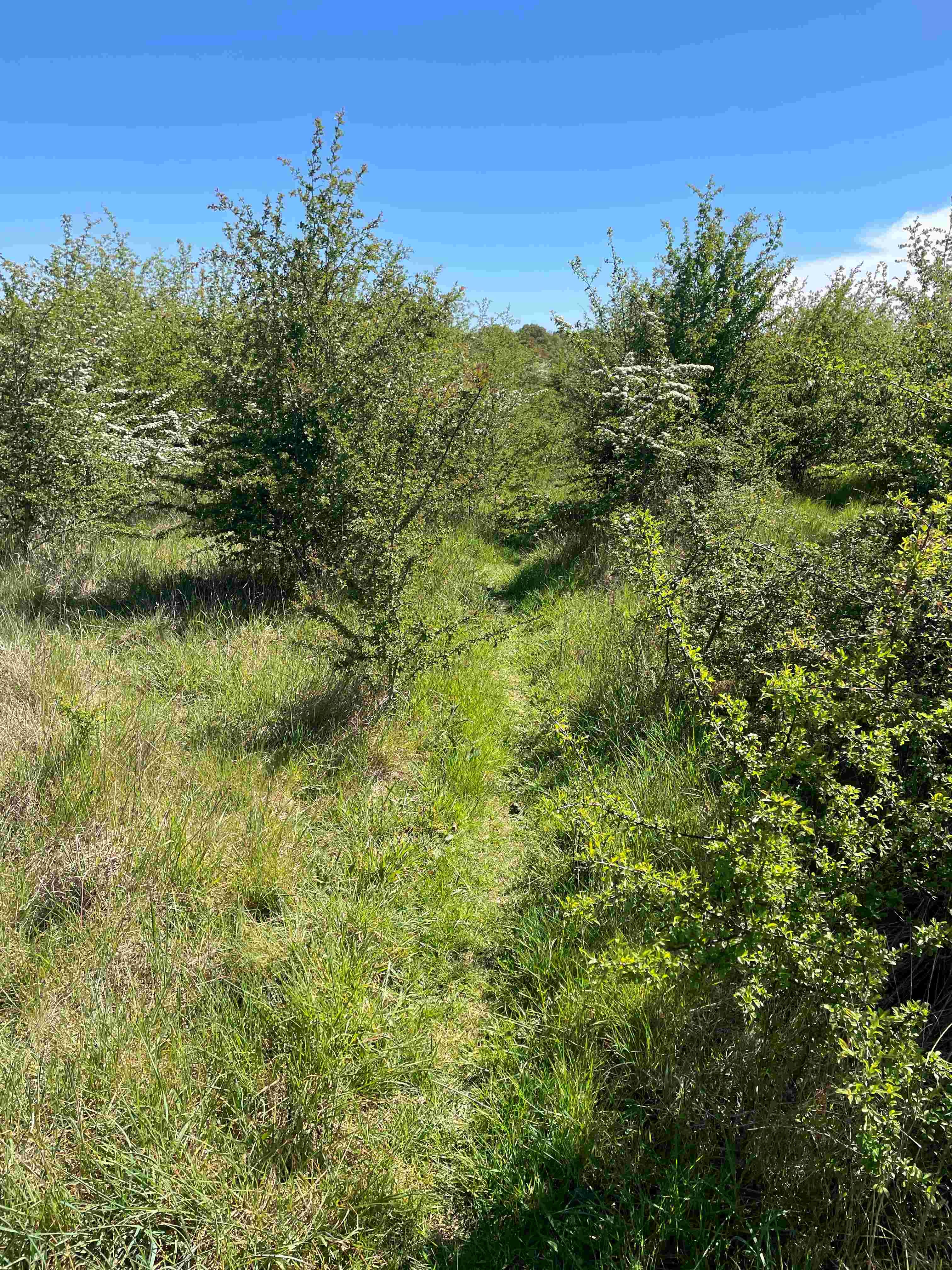
A secret way into the scrub
The scrub has been allowed to grow in patches across the field. Scrub is often denigrated, taken to be a sign of messiness and waste. It is a place loved by birds and insects and small animals. Impenetrable to humans, scrub patches of thorny bushes make mini nature reserves. I think the National Trust hope one day nightingales (mentioned in old records) and stonechats will come here, but already there is a good selection of tiny birds, many flown in from Africa, connecting the Common to the World. I hope in vain to hear a cuckoo; the little birds have nests they like to parasitise. I am given reports of one on the Common some years, so, maybe I’ll get lucky. But they are one of the disappearing sounds that cause me anxiety and sadness. I strain my ears. Will I hear a cuckoo this Spring?
In the winter the scrub supports another set of birds, from across the North Sea. The winter thrushes - fieldfares and redwings – and also thrushes and blackbirds – flock to feed on the hawthorn berries. They’re gone now, to fill other skies with the song, and to nest. I’d never heard a redwing sing until I went to Iceland.
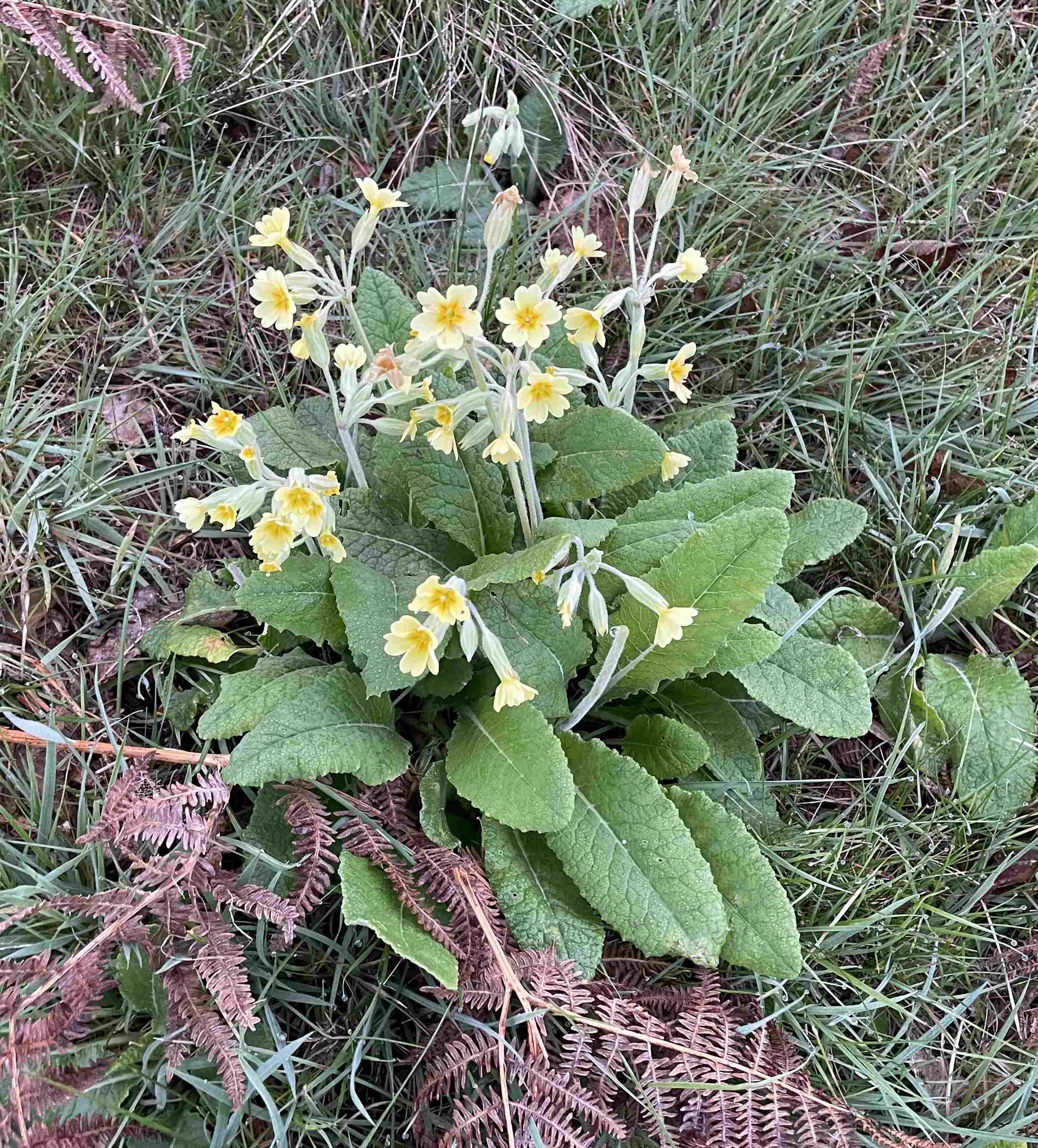
False oxlips on the Common - a hybrid of primrose and cowslip
I go to check on the oxlips. I was delighted when I first came across them a few years ago. A lone patch of a dozen plants, surrounded by dry grass, bracken and mown off hawthorn on open slopes. Could they really be oxlips? It seemed unlikely, but I remembered that Richard Mabey wrote of finding them in the Berkhamsted area decades ago, on the other side of the valley. I consulted a botanist who said, no they’re not the true species oxlip. Which was a bit disappointing but not surprising, as those have a very limited distribution, in clay woodlands in East Anglia. She said she’s never found Mabey’s oxlips.
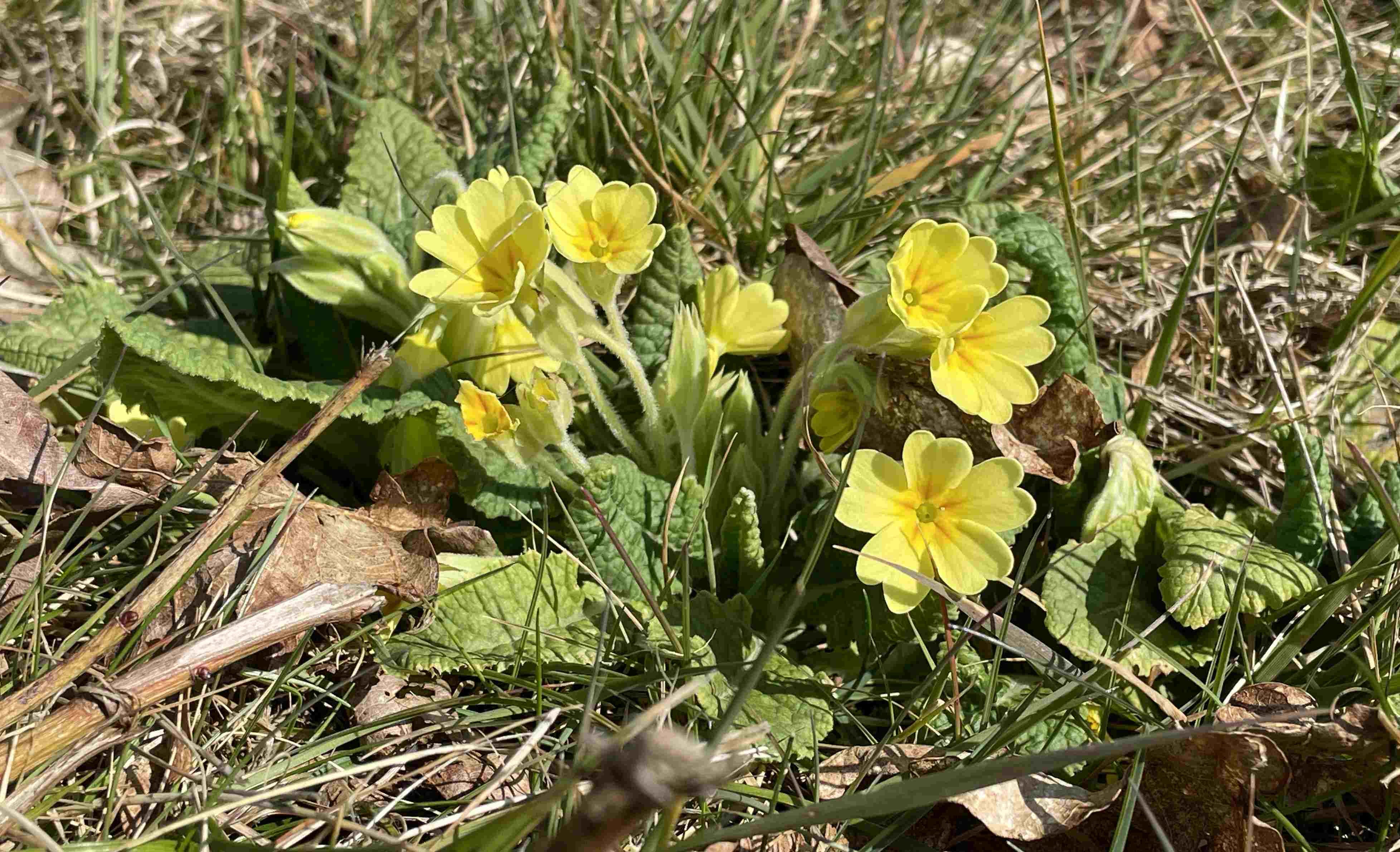
This one is more primrose like
The ones growing on the Common are ‘false oxlips’, a hybrid of primroses and cowslips, and can occur anywhere where both plants grow close together. But here, there are no cowslips or primroses nearby. It is such an isolated clump I wonder if they arrived through human intervention. But that also seems unlikely. Just a chance seed I suppose, dropped by a bird or a boot. Looking closely, I can see how they have elements of both parent plants; the flowers grow in a bunch on top of a thick stem, like a cowslip, but the petals are bigger and paler so each flower looks like a primrose. The plants are slowly increasing in number, and each one has different flowers, belying its hybrid origin. The smaller plants look more like cowslips, so perhaps the younger plants are tending in that direction.
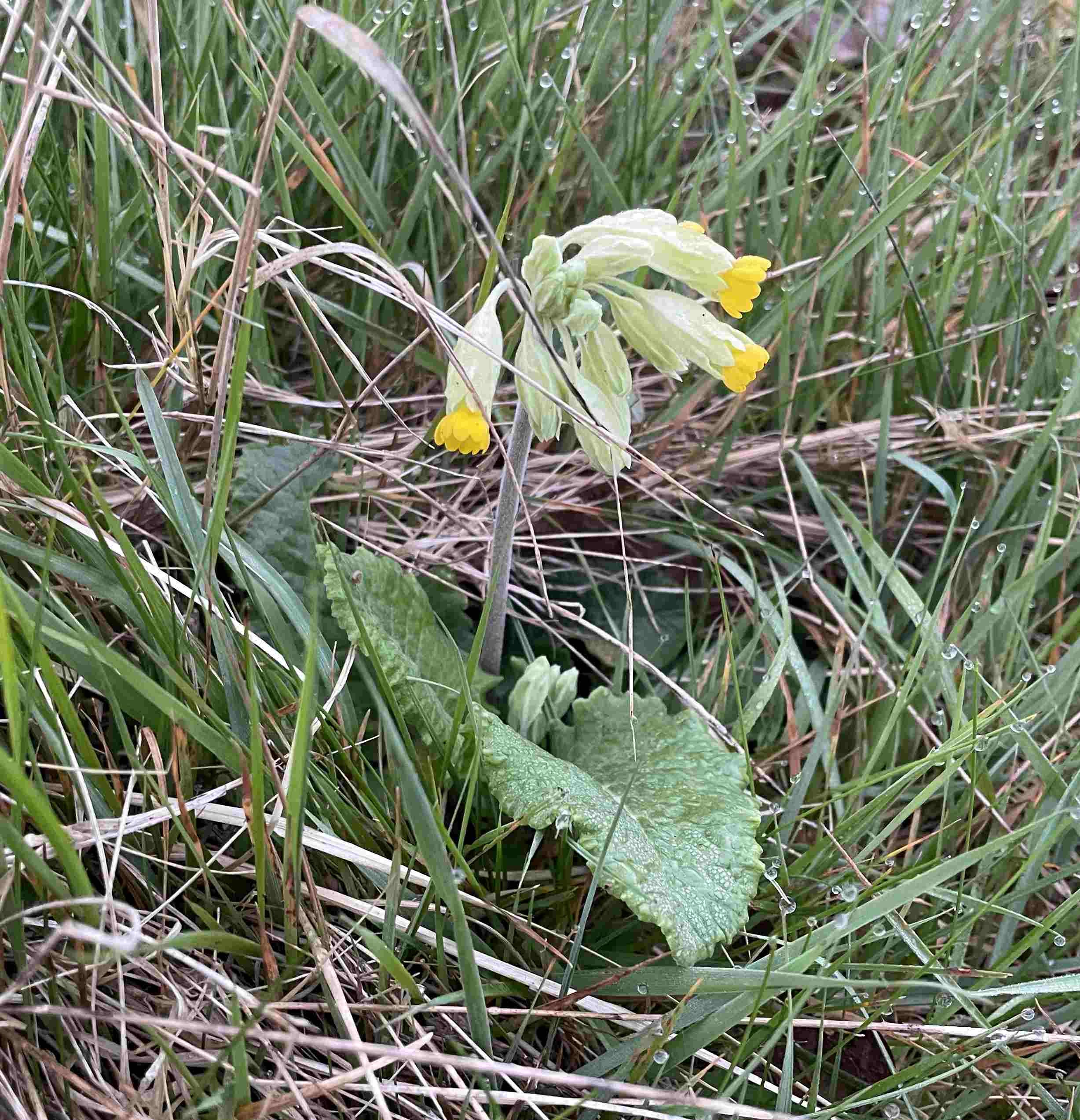
This plant is more like a cowslip
I’ve not found cowslips very close to Berkhamsted, except for the ones sown on the A41. They grow on the chalk grassland of the Chiltern edge, such as Pitstone Hill. There are primroses much closer; they grow thickly on the banks below the old boundary of the deer park, just outside the Common, in Alpine Meadow, and near the track from Hill Farm to Coldharbour. They’re on a dry, chalky, warm slopes, which surprises me as I think of primroses as being lovers of damp shady places. They are also on the castle motte, lower down the valley, tying together the medieval landscape.
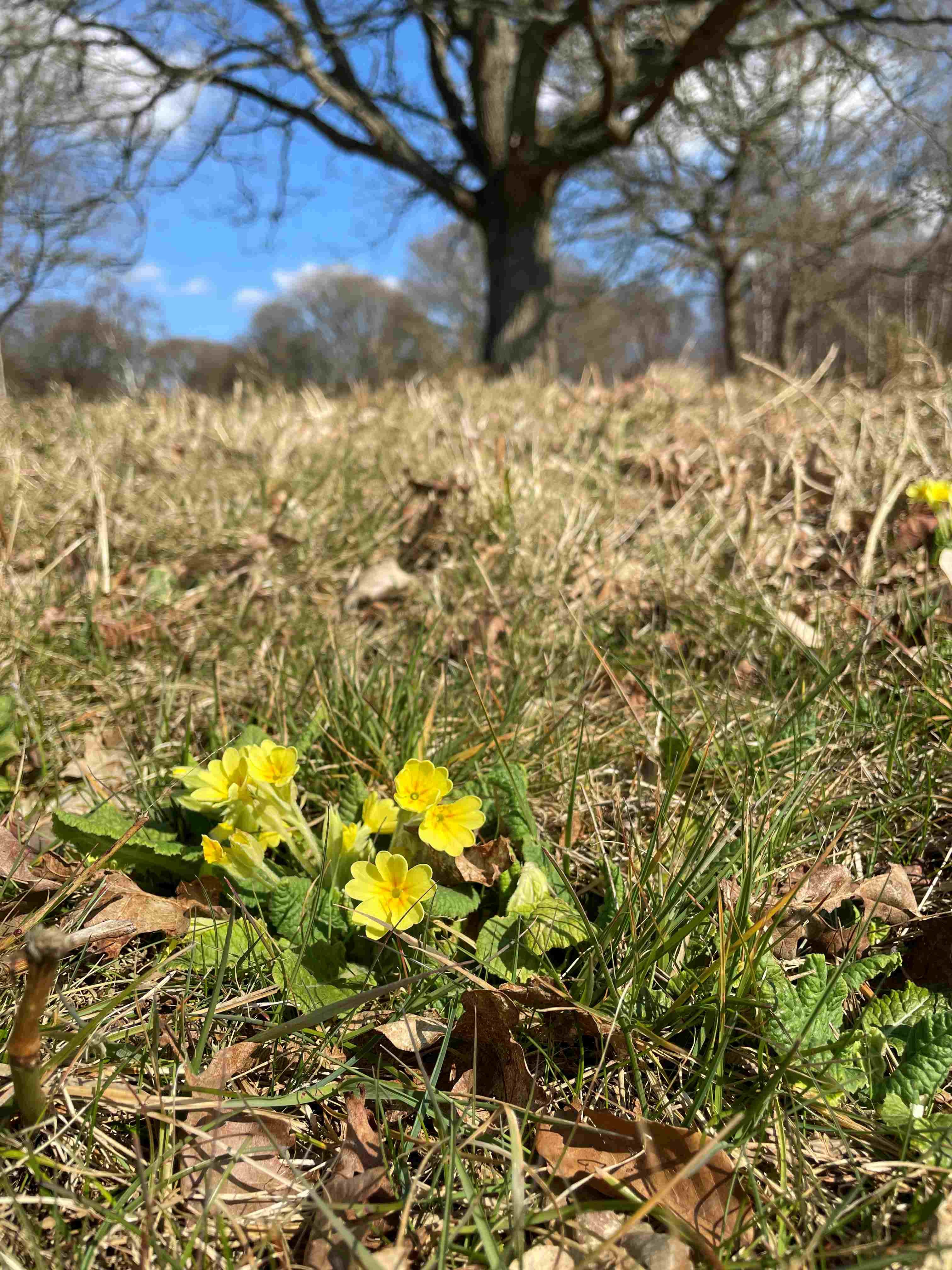
Oxlips near the oak I use to locate them
I suspect they used to be much more common in these parts. In Victorian times the children of Potten End used to collect the flowering plants to send on the train up to London. It would have earned a few useful pence for the impoverished cottage families. Over time, done at enough scale, they could have removed the whole population. This is an example of the ‘tragedy of the commons’, where an unmanaged resource is overexploited. It sounds a strange thing to do, but I have family tradition to support this. My father told me that when his family moved to a farm in Dorset in the 1930s they used to dig up the primrose plants on their land and pack them with moss in egg boxes to send back to their friends in London.
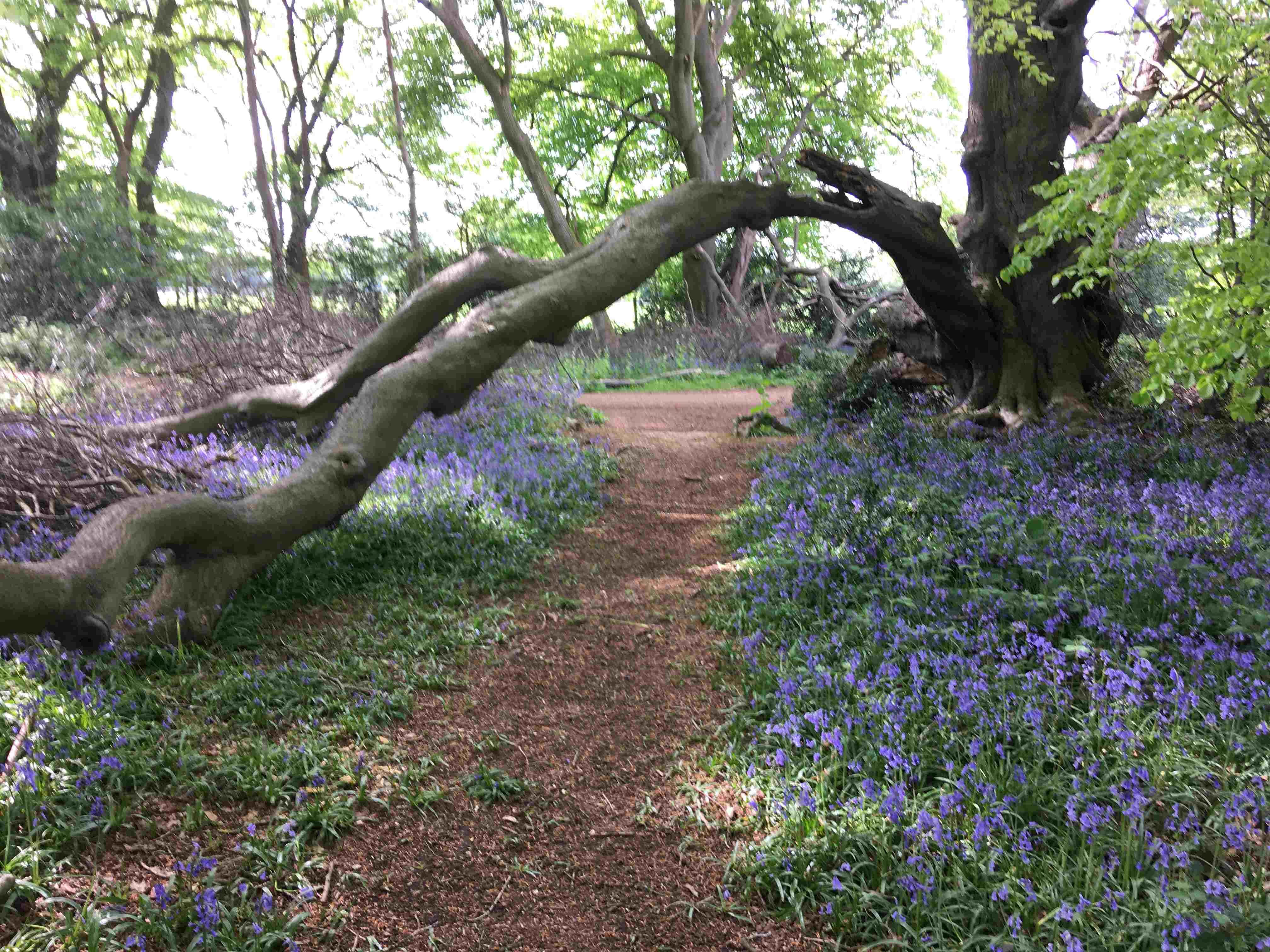
Bluebells on the Common - they don’t like being trampled so bare paths appear through the plants where people walk
The great spring show in this area are the bluebells. The floor of nearly every Chiltern woodland is a mist of purple blue, with brilliant fresh green beech leaves sparkling above. The air is filled with floral icing sugar sweetness. Going to see the bluebells is a much a seasonal tradition as Christmas, our quieter version of Japanese cherry blossom viewing. People come out from London on the train, having seen them on social media. The Common does not have the uninterrupted sheets of blue that the best bluebell woods have. There are plenty of bluebells, but they are in patches and pools, mingled in with green bracken croziers, poking through dead leaves, in grass, under old trees. They’re supposed to be indicators of old woodland, and not great colonisers, but they’re spreading out into the open grass of the Northchurch field, arable not so long ago. Maybe they are simply reclaiming their ancestral home, a species memory of the Frith. Puzzlingly there are also large areas on the Common where there are no bluebells, although the environment looks the same. Part of the fascination of wild flowers is their waywardness and unpredictability. Each year people in the town ask, are the bluebells out yet? We measure the progress of the Spring by the growth of the bluebells, knowing that by high summer they will have disappeared, leaving only a few dry seed husks.
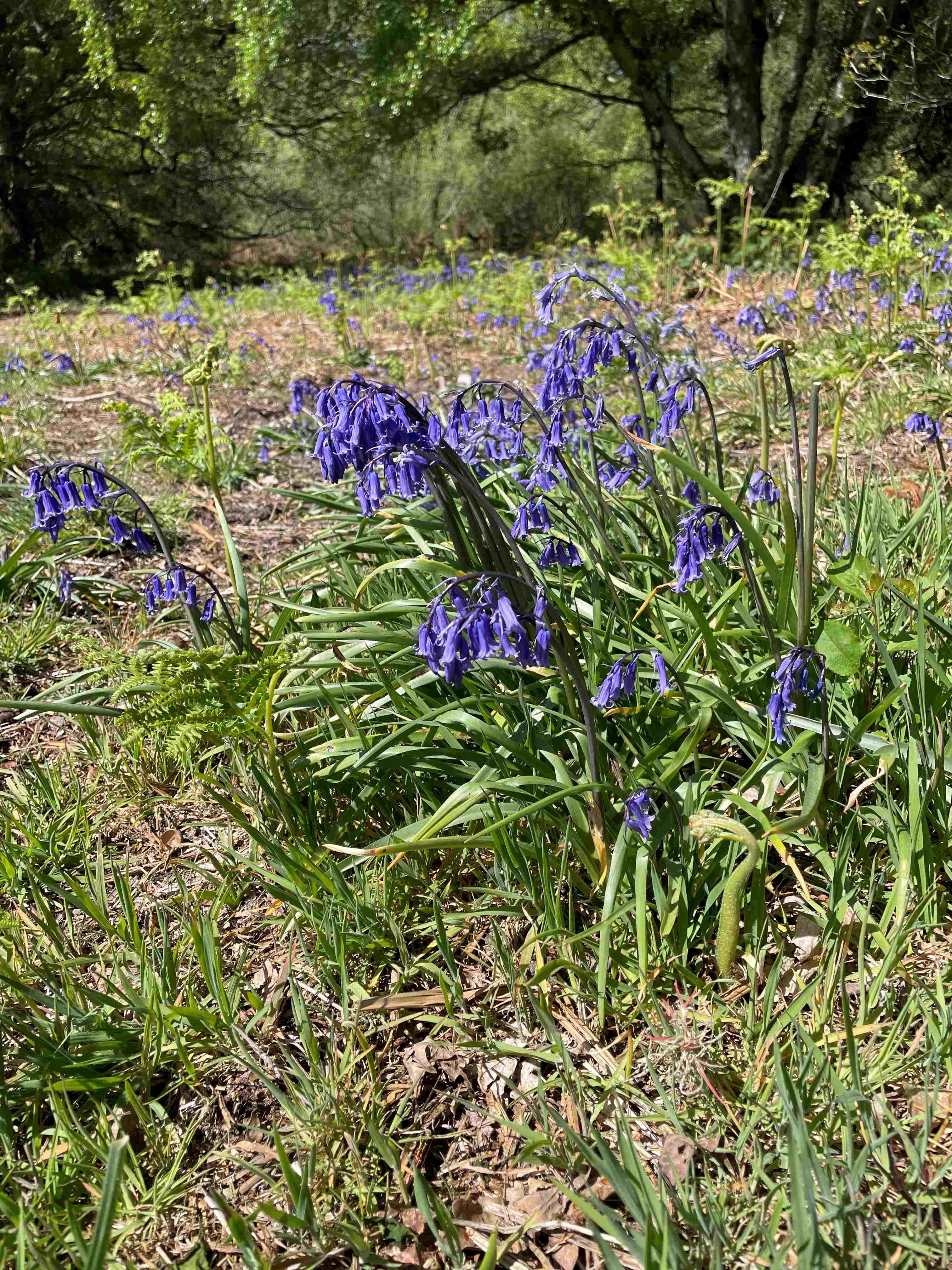
Bluebells on a sunny bank on the Common
Just gorgeous, Jenny. What a glorious evocation of Spring.
I'm in Argyll at the moment and the air is sweet with azalea and bluebells, and the song of cuckoos.
Lots and lots of cowslips in Bunkers near Hemel! We've heard cuckoos and woodpeckers in Hockeridge and Pancake woods which are our favourite place to walk.