Remembrance
The First World War on Berkhamsted Common

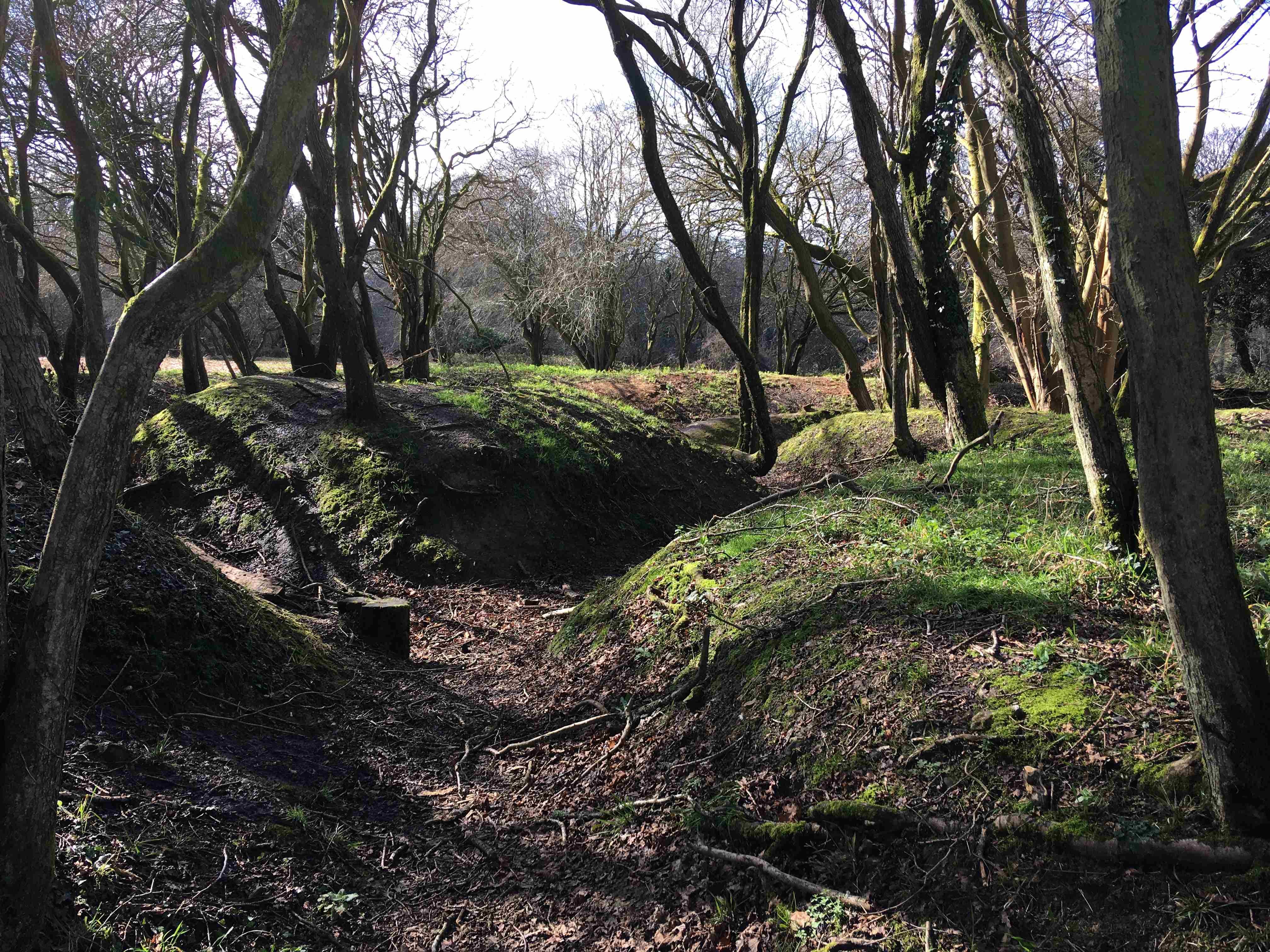
Part of the cleared trenches on Berkhamsted Common
For Remembrance Day I am writing about the Trenches on Berkhamsted Common. One of the things we know best about the First World War is that the war on the Western Front was fought in trenches. Trench warfare has become a byword for slow, deadly grinding warfare, in which millions of men, including my 21 year old great uncle, died. It appears that at least part of the Ukraine war is currently being fought using trenches, with the same slow grinding effect.
During the First World War Berkhamsted was chosen as the base to train the Officer Training Corps of the Inns of Court. This was a Territorial Army unit comprised largely of clerks and lawyers who worked in the legal district of London, with the nickname ‘The Devil’s Own’, inspired by George III’s comment on being told they were largely lawyers. Once they were trained, they went to other regiments as officers. Being officers, in that war, their casualty rate was very high because they led the men from the front. Of the15,000 men trained here, who then went to fight, 5,000 were injured and 2,137 killed
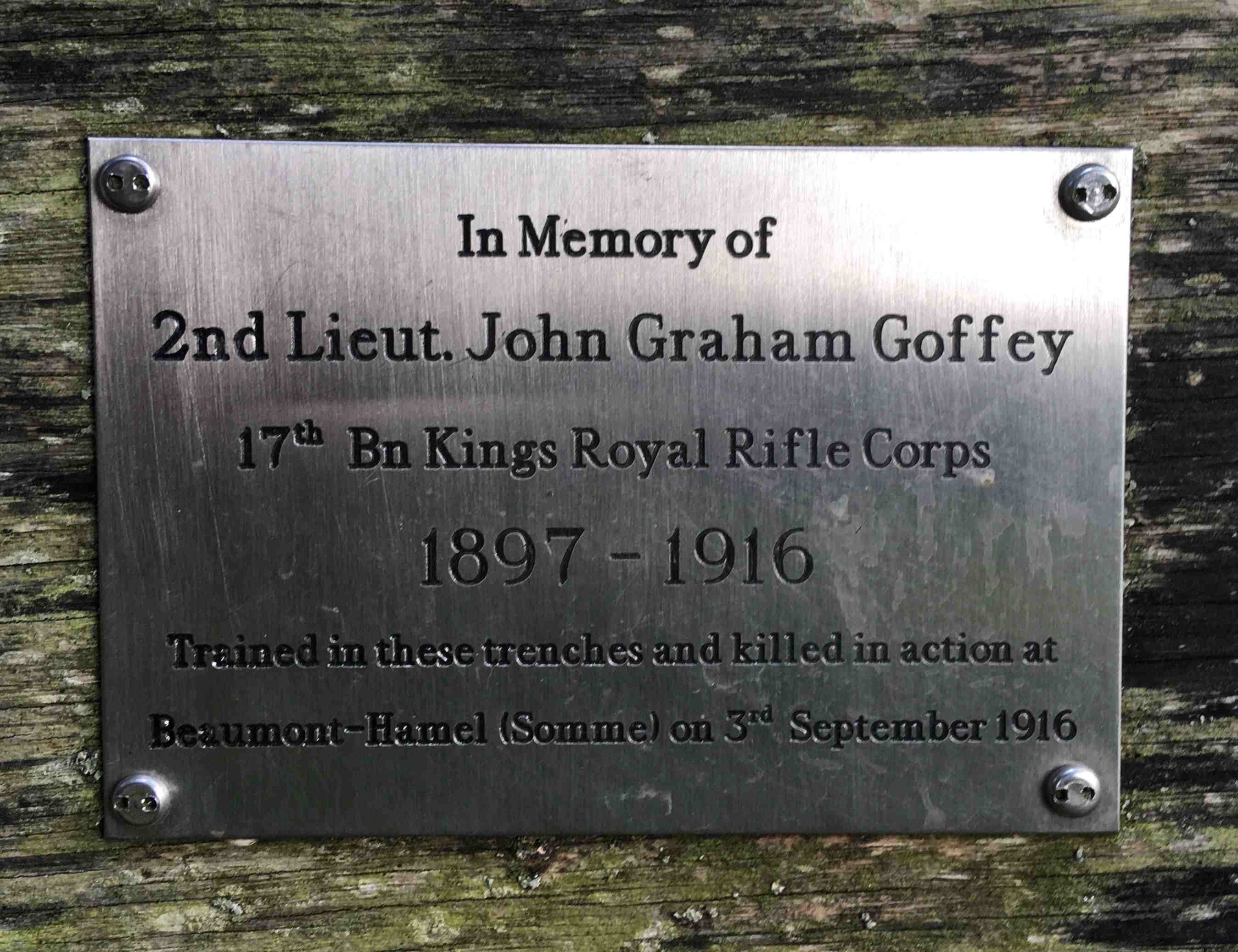
Just one of the men who fell is commemorated by name on the Common, on a plaque on the bench near the trenches. He lived in Berkhamsted, and his relations are still in the area.
English commons have often been used in national emergencies; they are useful pieces of ‘spare‘ land in a full countryside, being open, not used for crops, often elevated and distant from large settlements. They have long been used for military purposes, and some still are. Berkhamsted fitted the bill perfectly, with the added advantage of proximity to London by train, and a very sympathetic landowner. At that time the Common, and the fields between it and the station, were owned by the third Lord Brownlow, by then an elderly man. He was very knowledgeable about military matters, having joined the Grenadier Guards after he left school - an army career cut short by his brother’s death, when he inherited the earldom. He held positions in and actively supported the local volunteers in various counties where he owned land, and was Under Secretary of State for War in the early 1890s.
On 3 August 1914 Field Marshall Lord Kitchener was at Ashridge with his sister, having tea with Lady Brownlow in the loggia, when he received a telegram. He read it and said “Lady Brownlow, I am sorry I must leave at once. Do not worry I will take care of you,” adding “You will know why tomorrow”. Tomorrow war was declared. Lord Brownlow immediately offered his resources to the war effort, knowing full well what it would require of the country. Ashridge House was used as a hospital, and his other country house, Belton, as an army training centre. As part of the Ashridge estate the Common was taken for a training ground. It already had a rifle range. After his death in 1923 the estate gave more, in the high death duties imposed to pay for the war. But not as much as the men gave.
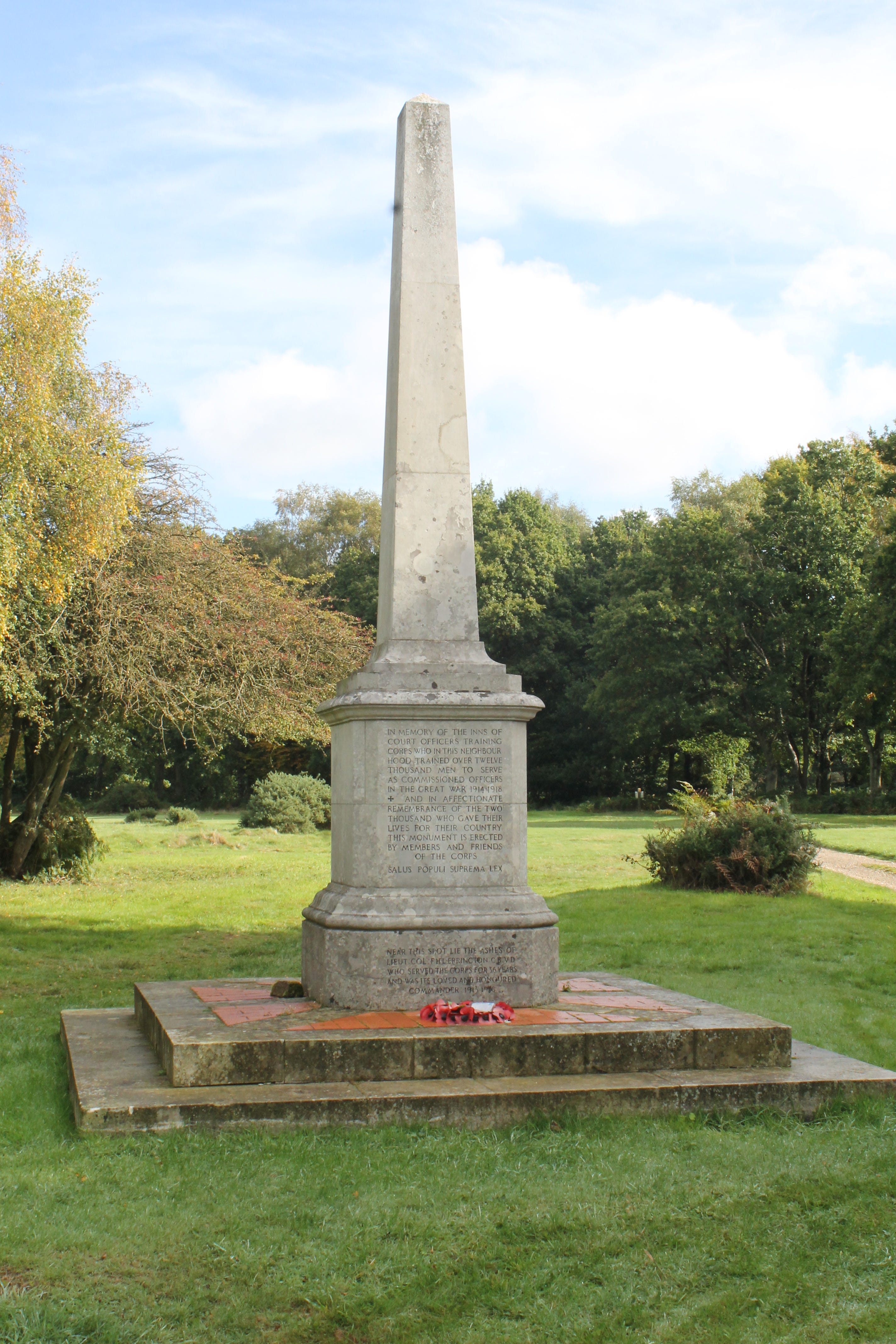
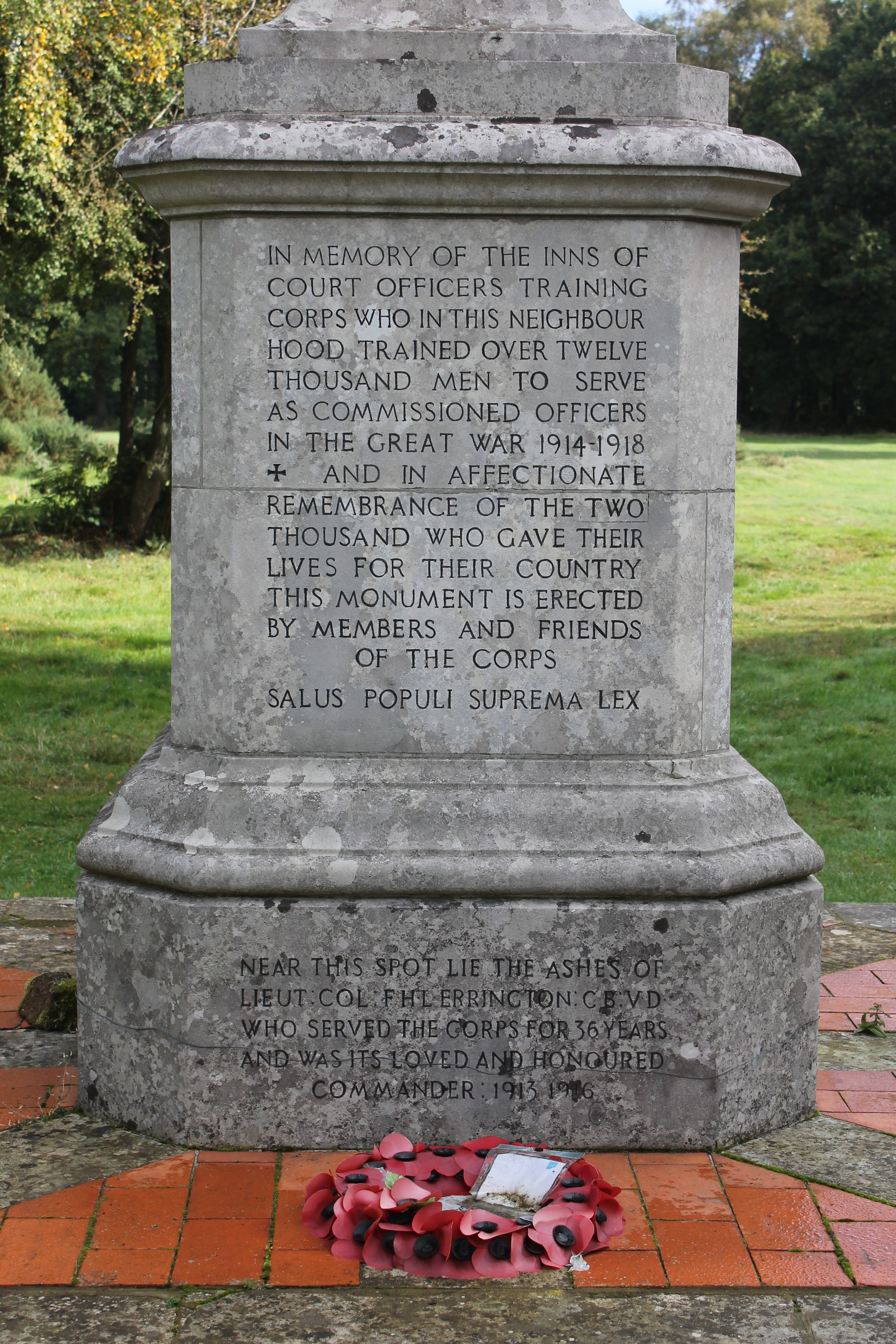
A memorial was erected on the Common, at the junction of New Road and the road to Ashridge. The Latin motto translates as “The safety of the people is the supreme law”.
Part of the men’s training was learning about the trenches. These were mainly dug along the slopes of the Common in the area above the castle, and on Northchurch Common. They built about 15,000 yards over the four years, and managed to make complete trench complexes. Their camp was in the fields, which are still called Kitchener’s Fields, near the castle and railway station. The remains of the trenches are still there, largely filled in, but visible in discontinuities on the ground, winding depressions, shallow pits and small banks.
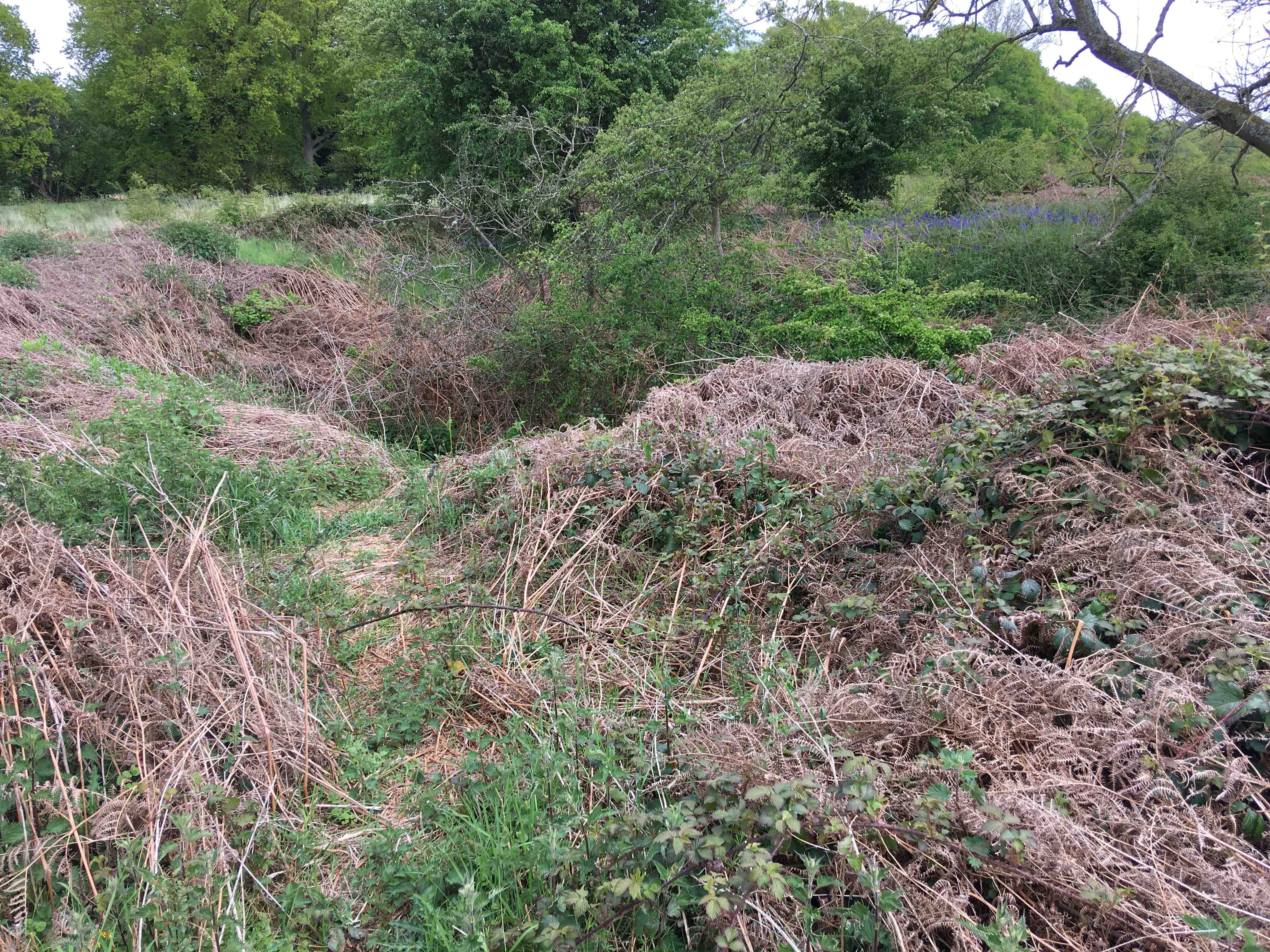
Most of the trenches are filled in and overgrown
This is an account of a walk I made around some of the trenches a couple of years ago:
‘I am looking for the end of the trenches: I know they are nearby, hidden in the bracken and bramble. Miles of trenches were cut on the Common in the first World War by men training to be officers. Then they went off to the Flanders killing fields. Most of the trenches were filled in: the scars remain: the fill sunken leaving little edges: a messy vegetation of the sort that grows on disturbed ground: nettles, ground ivy, elder, hawthorn, a thick winter-fluorescent green ferny moss. Observe the vegetation and you know where the trenches are. The trenches I am seeking were not backfilled, and around the centenary of the war they were surveyed, vegetation removed and cleared out. They are signposted and have an information board for visitors. Nevertheless, they take a bit of finding, not being near any road or car park.
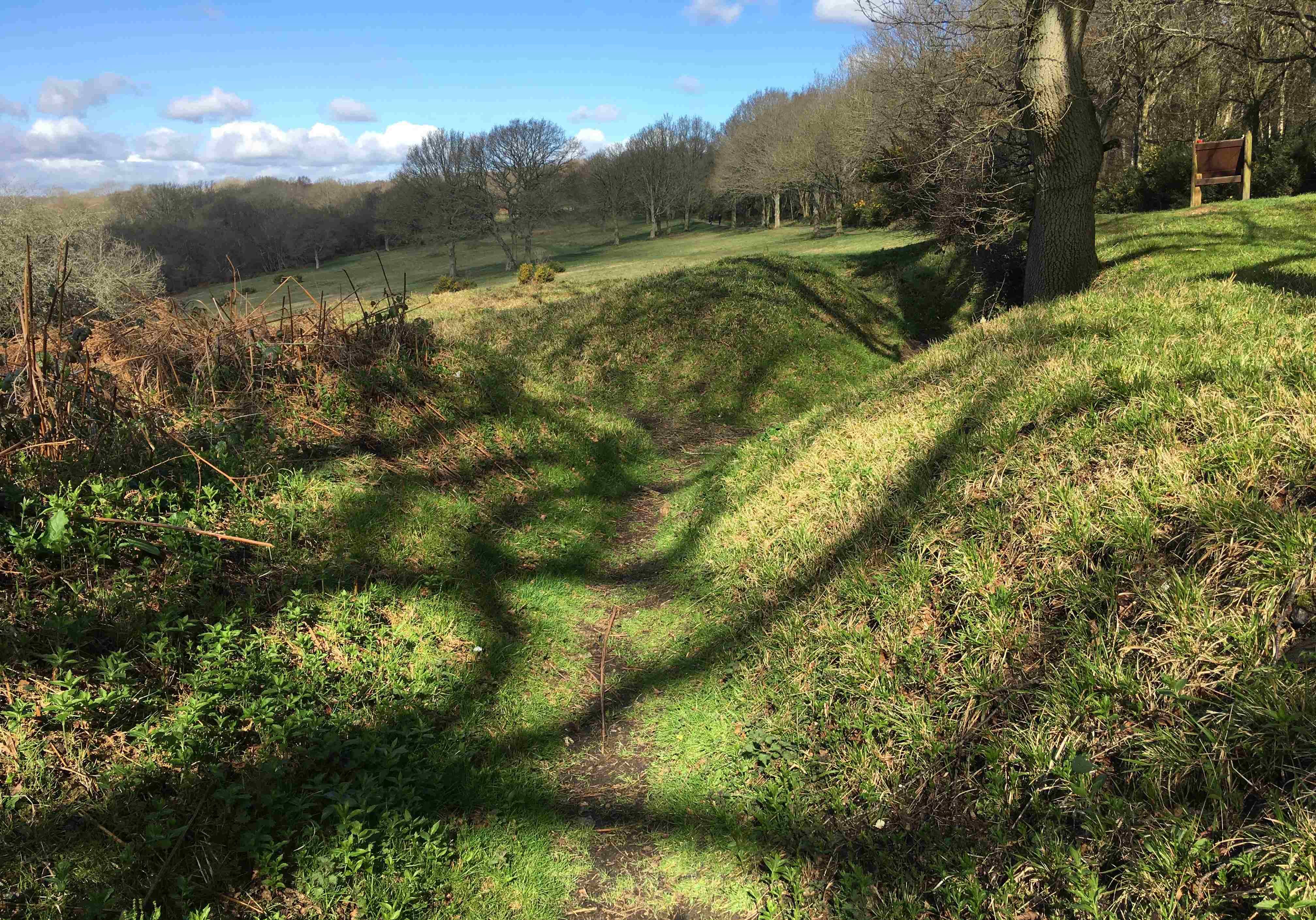
The path along the bottom of the cleared trenches
I come to the cleared area and sit on the top of a trench bank to draw them. The trenches are a pleasing mini landscape of winding valleys and bluffs, the banks topped with curving hawthorn trunks, making a thorny vault. It is superficially pastoral, but in this place there is a sourness, a disturbance and a feeling that things are not as they should be. Today it is nearing Remembrance Day – poppies are on sale in town. Wreaths will be laid at the war memorial by the golf course. The shadow of remembrance slides through this place, even as it looks pretty today in flickering late autumn sunlight, shining off golden leaves. When I come here I feel an intruder. It’s like visiting a churchyard. It is someone else’s sacred space. I don’t feel comfortable with the remembrance. Should I be drawing, using it for my aesthetic pleasure?
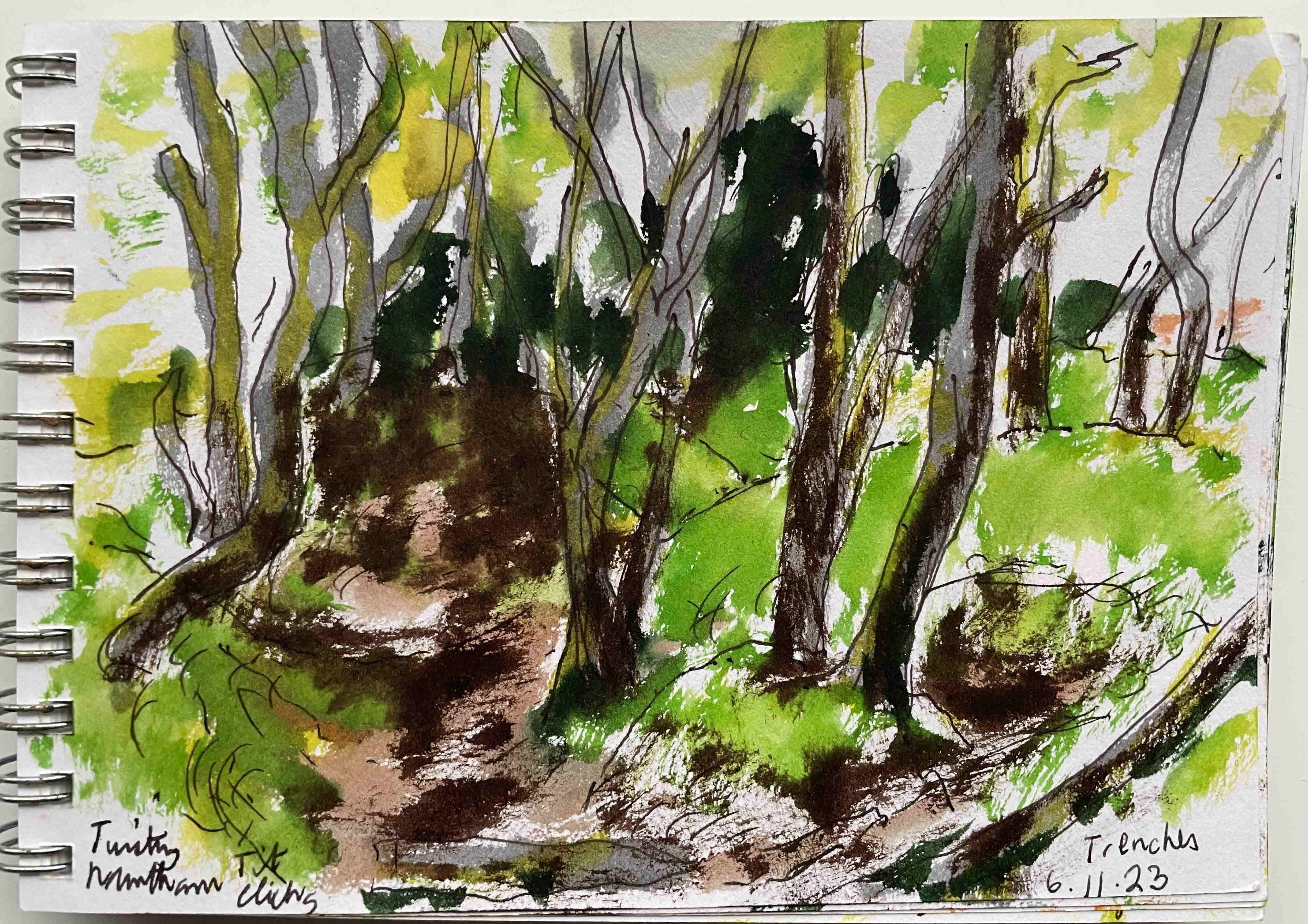
My sketch of the trenches
The trench has a path at the bottom, and I walk along it. A large oak tree is growing out of the bank. It cannot be more than a century or so old, yet it is a very substantial tree. The oak tree, an old symbol of British military might, the material of the great Empire navy: ‘Hearts of Oak’. The oaks grow like weeds on the Common. There are two parallel trenches along the hillside, joined by two downslope trenches of greater wiggliness and complexity, with hollows I think were called foxholes. I detour into one of them. Then I continue along the first trench. A deer path crosses it. Once I found a deer skull near here in a trench. There are large flints rolled down to the bottom. I wonder at the men digging this ground. They complained about it. The red clay is like concrete when dry and glue when wet. It is shot through with flint stones, glass hard. The trenches were once lined with posts, planks and sandbags, now long gone, leaving mini steep sided valleys. Material has fallen in so the trenches are now only waist deep, or less. The trench gets harder to pass along as bracken encroaches over the top, tough stems tugging at my legs. The trench ends at a large chalk pit. I have been told it was used as part of the system. I edge round the top of the quarry, and pass the end of the top trench, before I follow another deer path downhill, scuffed up with hooves into a muddy line through the leaf litter, down into the woods.’
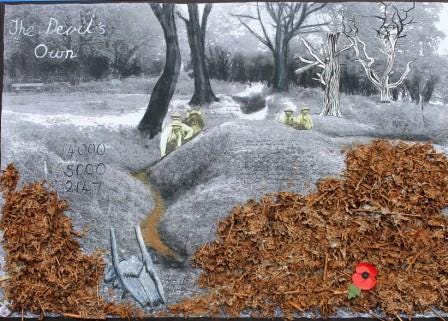
A collage I made about the trenches
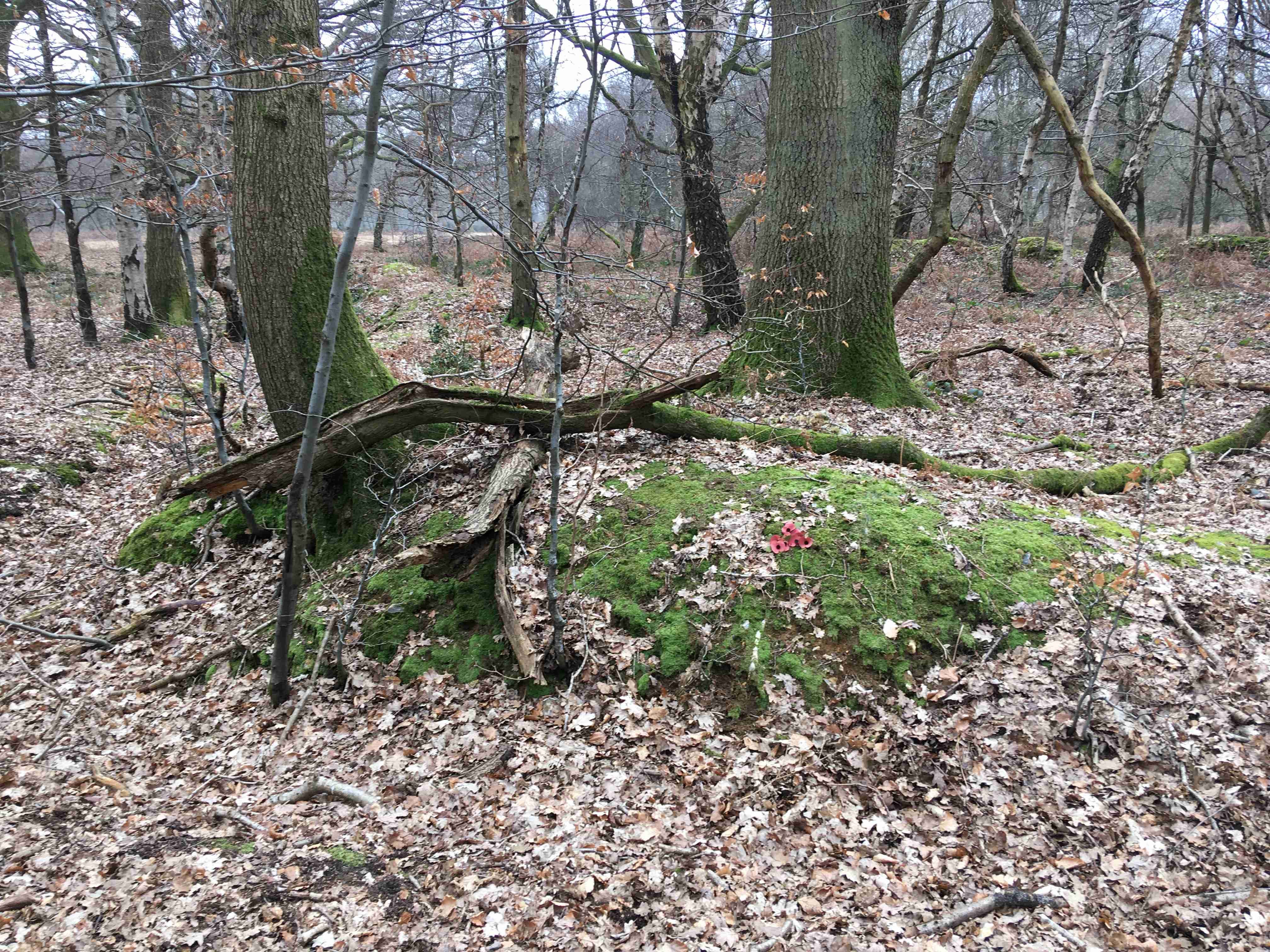
Poppies laid in the woods.
Memories are written in the landscape, not just where memorials are erected. Thank you for remembering the fallen.
Beautiful writing Jenny. So much to think about from days and uses past.