Augustus Smith
The man behind the 'Battle of Berkhamsted Common', and 'King of Scilly'

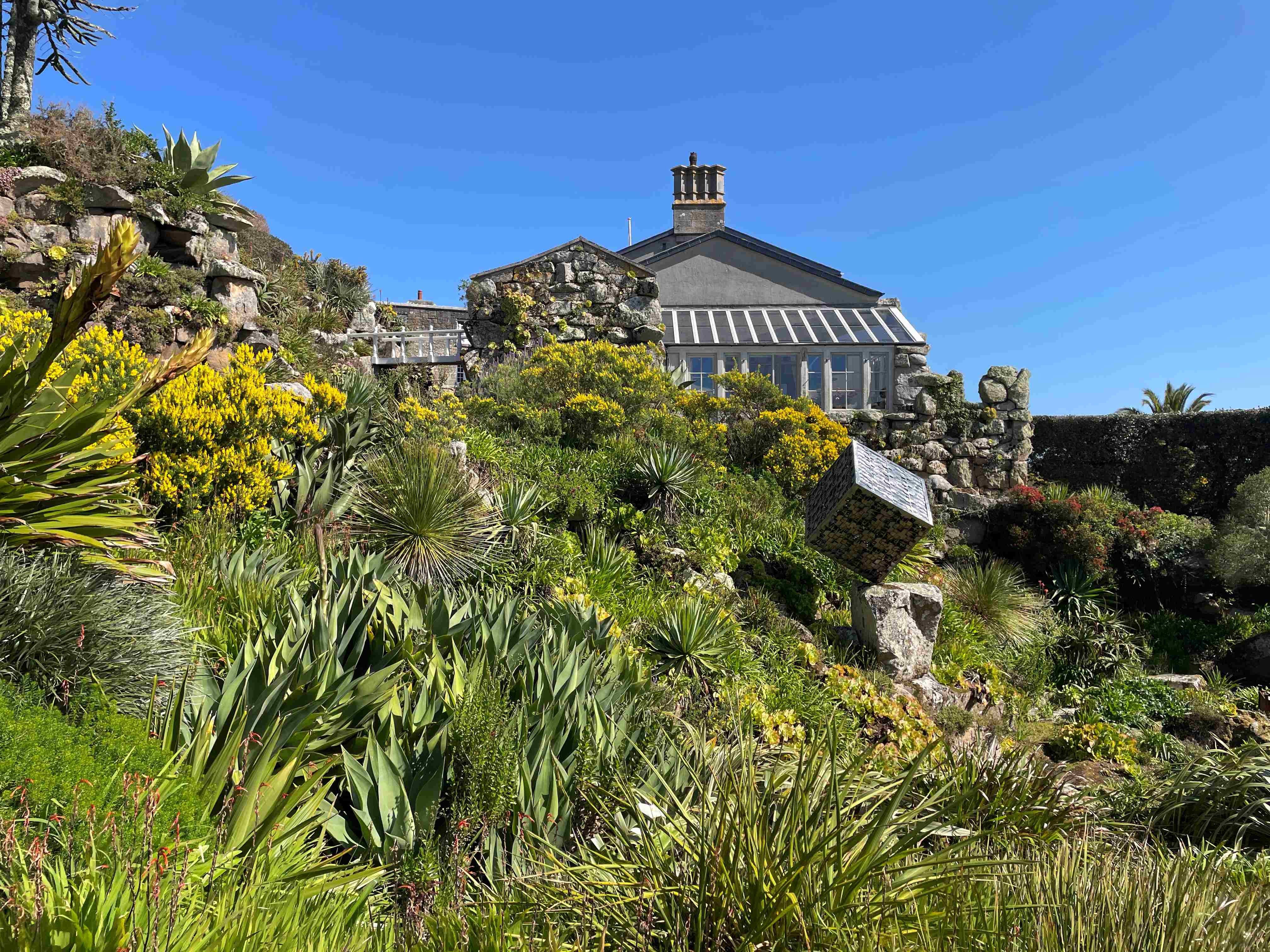
Tresco Abbey and gardens, Augustus Smith’s creation
Augustus Smith is named in most accounts as the leader of the action to remove the fences that Lord Brownlow had erected across Berkhamsted Common in 1866. The breaking of the fences was not his idea, but he was fully engaged in the meetings that planned the action, and he paid for it. It was his name that appeared in the newspaper reports, and he wrote a pamphlet (he had previous form as a pamphleteer) to explain what had been done in his name. He was ready and able to defend himself in the ensuing legal case brought by Earl Brownlow against him, and he reciprocated in a counter case, Smith v Earl Brownlow, which decided the matter in 1870. This was costly and time consuming. Only he could have done it - he did not need to – the personal benefits were slight – many people would have let it go. The local defenders of the Common (who were probably in the minority) and the Commons Preservation Society were lucky that here there was someone perfectly suited to their cause.
Augustus is a fascinating character. I am not the only one to think so; unlike most of the people I have encountered in my Common researches, he has several thorough biographies, and has inspired a couple of characters in fiction. After he died a volume of his letters was published, so we can hear his ‘voice’. And most of all he created a place which many thousands of people still visit every year.
By the time of the battle he had been living in Scilly for about thirty years. He leased the archipelago from the Duchy of Cornwall, and had devoted himself to developing the islands, using his own money. He acquired the nickname, ‘King of the Scilly Isles’, although he coined the title for himself of ‘Lord Proprietor of the Isles of Scilly’. It was as close to a personal realm as a plain Mr Smith could have got in the British Isles. It is hardly surprising that the Brownlows considered that he would be uninterested in lands in Berkhamsted. Lady Marian Alford (Lord Brownlow’s mother, believed to be the promoter of the enclosure) wrote ‘that his non residence in England made us imagine that his interests were of course represented by his man of business, and no personal reference was needed.’ Big mistake. She also wrote that the Brownlows had reason to believe he did not object to the enclosure, either on public or private grounds. It is not clear why they might have thought this.
In telling her side of the story, Lady Marian could not resist a personal attack on Augustus: ‘If one may say without ill nature, his absolute autocracy on Scilly had given a bias to his mind which made it difficult for him to refrain from dictating, when he felt that his family interests gave him a voice, though his constant residence elsewhere had caused him to be looked upon as an absentee who had no real affection for Berkhampstead’
This is unfair; the Brownlows were the newcomers to Berkhamsted, and Lady Marian spent a great deal more time abroad than he did. Augustus had a very deep affection for Berkhamsted and its inhabitants, so much so that, quite late in his life, he was prepared to stand up for, and pay up for, what he thought were the interests of the town.
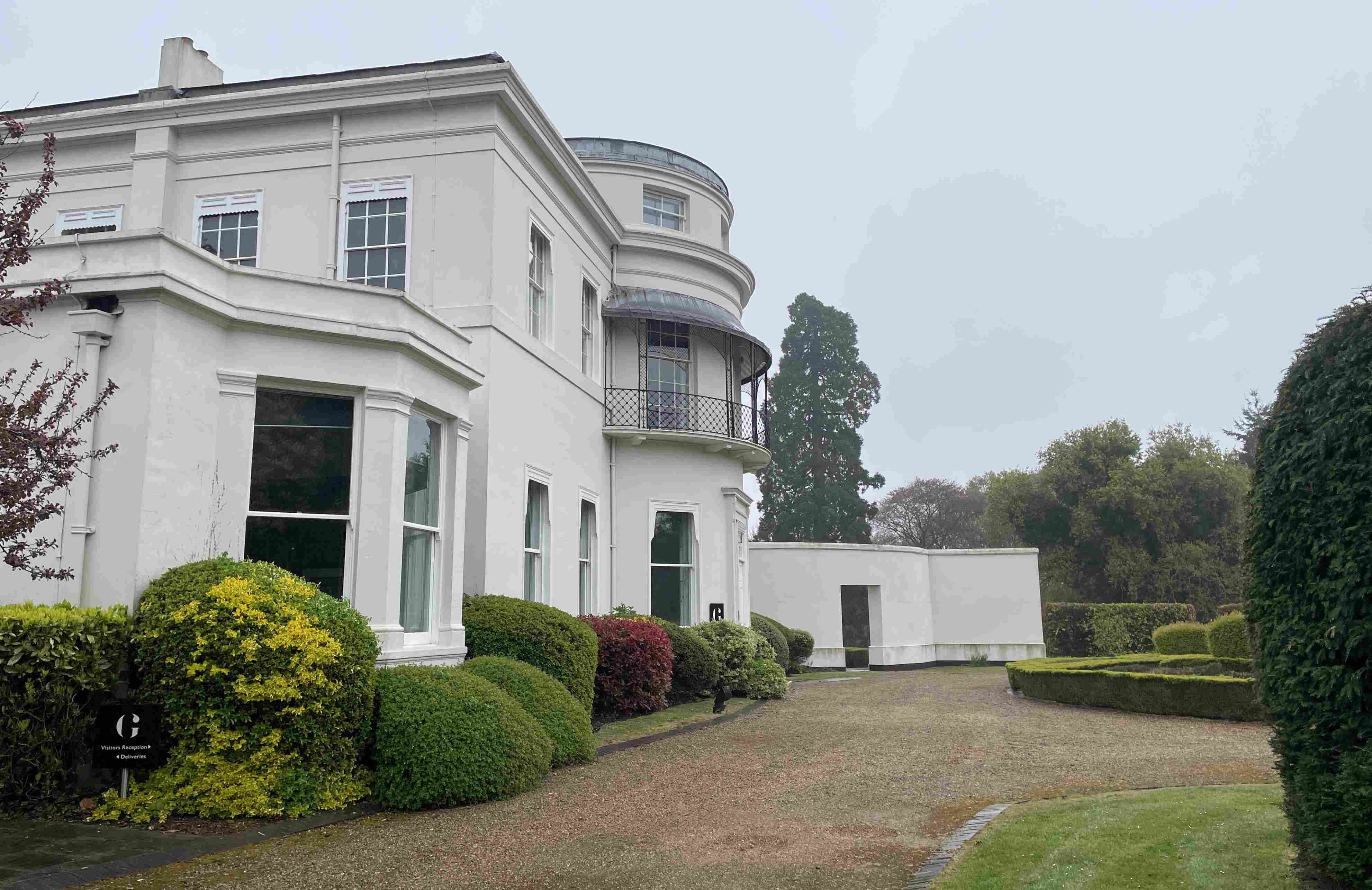
Ashlyns Hall, Berkhamsted. This was Augustus’s family home.
Augustus was born in 1804, and was brought up in Ashlyns Hall, in Berkhamsted, which had been bought by his father in 1801, after his first wife died. The Smith family had been bankers and merchants, but by then they had sold the business and were living as country gentlemen. His mother, his father’s second wife, was from a family that lived in Berkhamsted, so Augustus was entangled in a web of relations from the local gentry class. He had the upbringing and education of a gentleman of the time; country life, Harrow school and Oxford university. However, he was not a man who was going to settle into the life of a ‘Jane Austin’ type country gentleman. He was a modern man, a man who noticed the world around him, which was in upheaval, and who wanted to take action. Sometime in his youth – perhaps at university - he had encountered the ideas of Utilitarianism, developed by Jeremy Bentham, which were hugely influential on economic and social thought in the 19th century. When he left university, in the 1820s, and returned to Berkhamsted he found the town in a poor state, with a great deal of poverty, neglected schools, roads and lacking many elements of civilised life. It operated more as a country village than a town. He soon applied himself to improving its education system and management of the poor rate. He was successful in these, but ran into tiresome local opposition from the elite of the area, and found its society stifling. They probably found this opinionated young man insufferable. He said that Ashlyns had two drawbacks; its ‘genteel neighbourhood and distance from the sea’. So, he went looking for a place more amenable to his ambitions, where he could act freely.
In 1834 he took on the lease of the Isles of Scilly from the Duchy of Cornwall. This group of semi submerged small islands, rocks and reefs twenty eight miles off the south west tip of England, were as ungenteel and by the sea as he could have wished. They had been neglected by the Duchy and previous tenants, and a recent Inquiry reported abject poverty and squalid living conditions, with people on the outer islands subsisting on limpets. This was an ideal project for Augustus.
Last Spring I went to Scilly. I hoped that I might find documents relating to Augustus in the archives there, but was disappointed to find very little. What I did find was his works. When he took on the lease, he committed to the Duchy that he would invest in new quays and churches, to which he added schools and other public buildings. Each island has a church, a school and a reading room. The solid granite buildings, the construction of which he oversaw, are still there, reflecting the man; dignified, plain, rugged, utilitarian, and solid against storms.
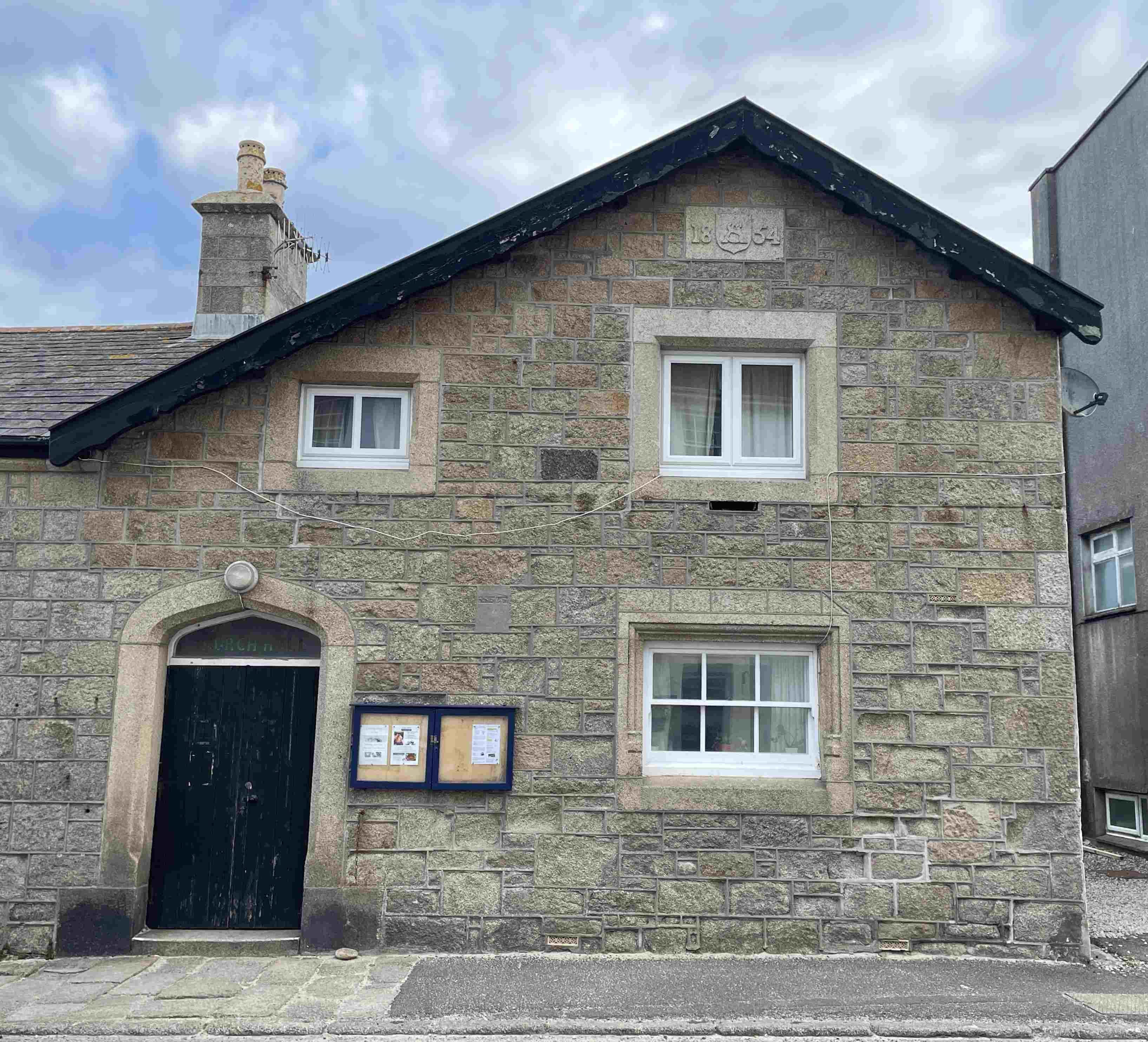
Part of the school building Augustus built in St Mary’s, Scilly.
His monogram is on the date stone under the gable.
In his early days, he was a reforming ‘improving’ landlord, which meant he disrupted the lives and customs of the local people, something he considered necessary to improve their economic circumstances. Unlike other ‘improvers’ he was less concerned about advancing his own financial interests – he claimed he made no money out of his Scilly ventures. Nevertheless, there is something of the white colonialist about his approach. He reorganised the landholdings, and deported people who would not cooperate or were troublemakers. He banned the digging up of turf and furze – typical commoner’s activities – and fenced off areas for his exclusive use, making them no longer accessible to the locals (who would sneak in at night). If she had heard of these activities (which she may well have done as her sister in law was a close friend of Augustus), it is not surprising that Lady Marian would have assumed Augustus would be on the same side as other ‘improving’ landlords.
He chose Tresco, rather than the largest island of St Mary’s, as his personal estate, and built his home there, overlooking the sound in the centre of the archipelago. It’s a Benthamite panopticon; he could watch all the shipping movements across the waters. The Scillonian men, who benefited from the education he oversaw, pursued maritime careers, travelling all over the world, and brought plants for his garden, which is now the famous Tresco Abbey subtropical gardens.
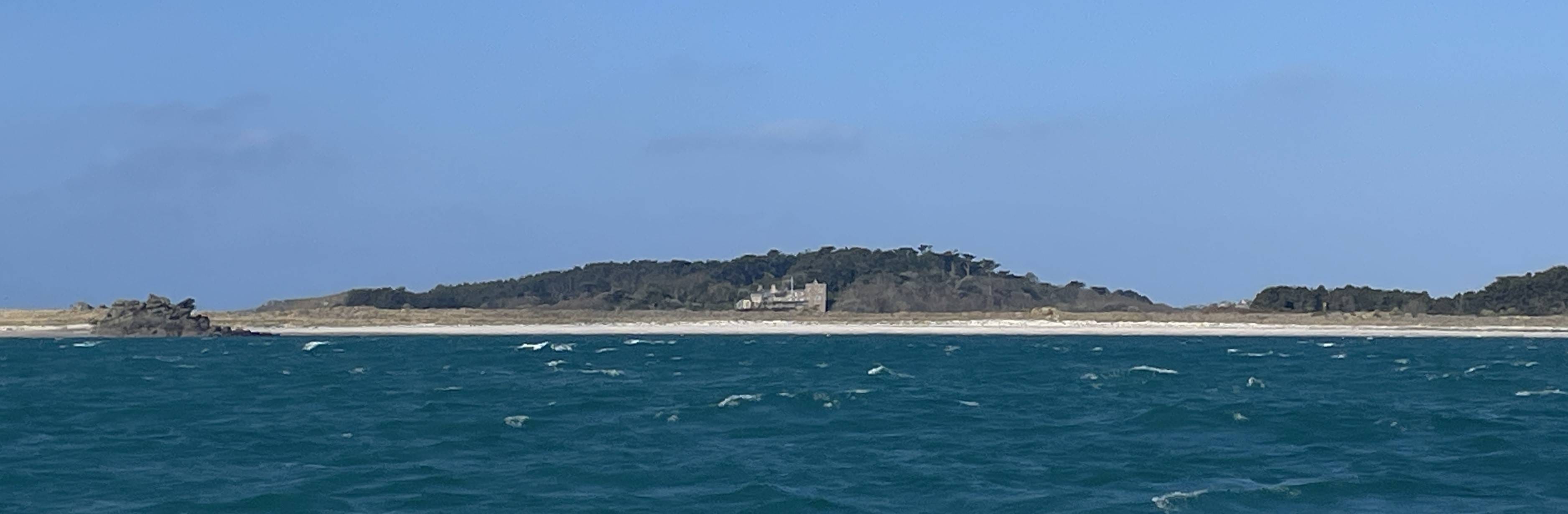
Tresco and the Abbey from the sound, on the crossing to St Mary’s
Visiting the island now, it is an extraordinary place, a piece of the Home Countries set on an Atlantic reef, next stop America. The centre has meadows and hedged fields, mature woodlands, and villages with neat cottages. Yet within a few minutes’ walk you are on windswept moorland above battered cliffs, facing Atlantic swells. The woods are an achievement against the odds - many times the ones Augustus planted on the bare island were blown down by storms. It feels very Augustus; orderly, rational, comfortable, practical, impossibly ambitious, romantic and wild. Augustus said he wished he could lift up Berkhamsted and set it down by the sea. This was as close as he could get.
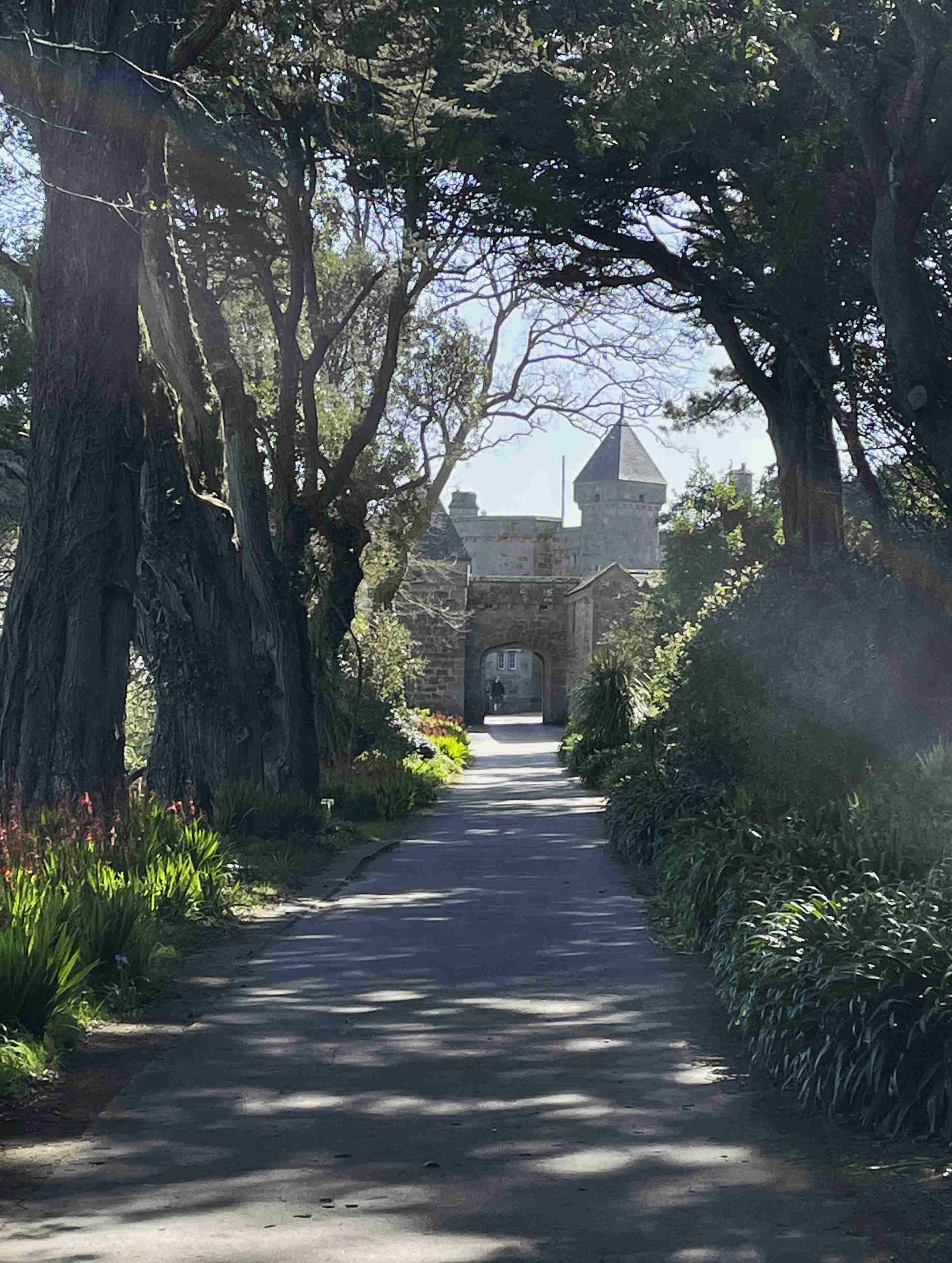
The approach to Tresco Abbey through woodlands
When he first went to Scilly getting there from Berkhamsted was a very hard journey, by stagecoach and sailing ship. As the years passed, and Victorian technology developed, connections improved, with a railway line from Penzance to London, a steam ship ferry, and telegraph. Flowers could be sent to Covent Garden to be sold the day after picking. Society came; his friends and relations visited for extended holidays, and as rich Victorians took up yachting, high society passers-by dropped in, including one time, the teenage Earl Brownlow and his brother, and in 1865, the Prince of Wales. Visitors were generously entertained with his idiosyncratic menus, featuring vermicelli soup, his remedy for seasickness. There also a great deal of commercial maritime action, as ships passed by, calling in, picking up pilots, sending messages to their owners in London, and occasionally getting wrecked. Augusts collected the figureheads of wrecked ships into a barn in his garden he called Valhalla. He dressed like a sea captain and threw himself into maritime affairs, despite being prone to terrible seasickness.
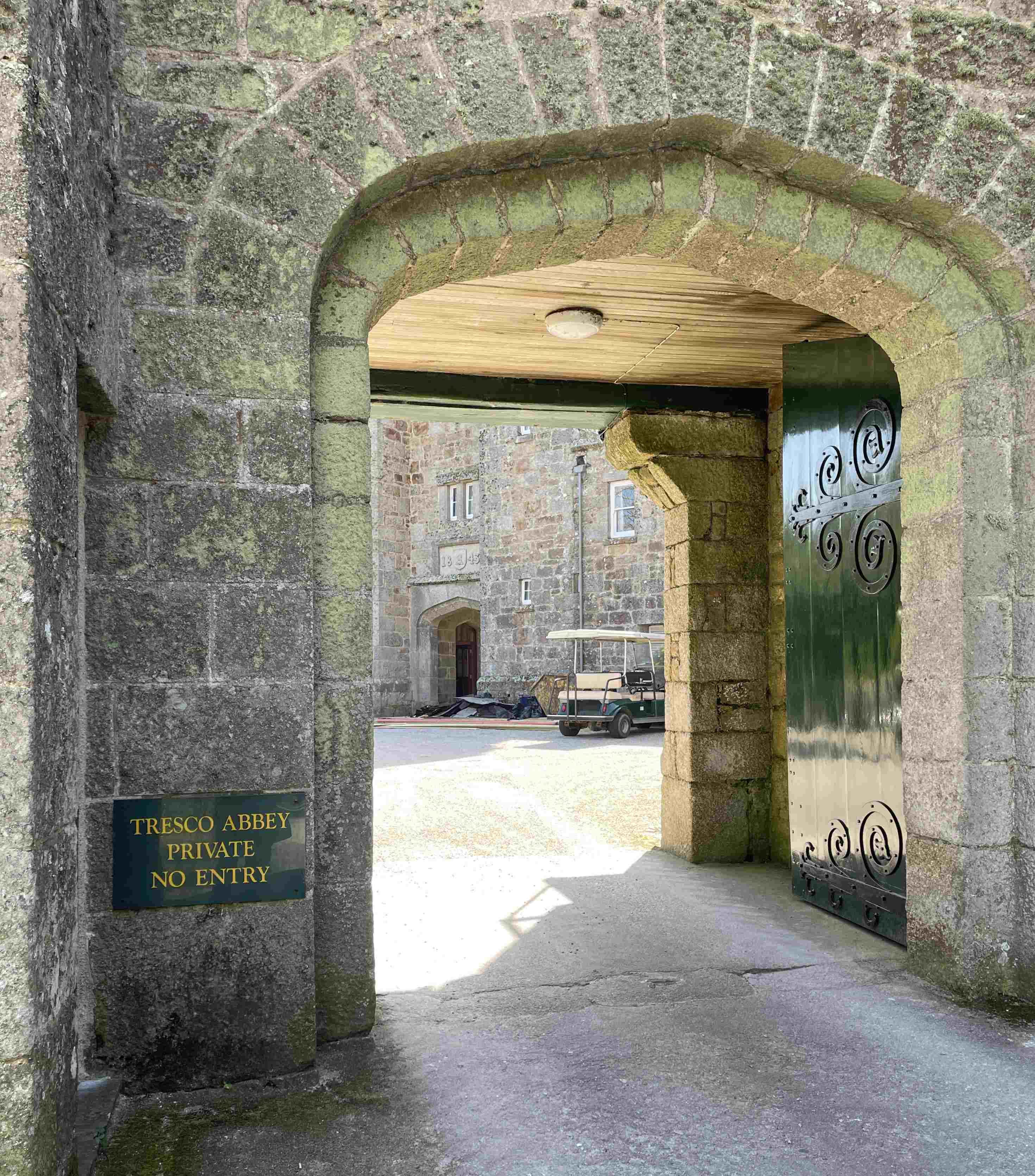
The front entrance to Tresco Abbey, built by Augustus as his Scilly home
Augustus didn’t stay on the islands all the time; he had a house in London, and often visited friends up country. He participated in Cornish life – he was an enthusiastic freemason in Penzance and member of the Geological Society. Between 1857 and 1865 he was Member of Parliament for Truro, where his most notable contribution in parliament was ‘wearying’ speeches about the ‘foreshore question’ (another dispute with the Duchy, with a ‘commons’ element).
He was liked and admired by many people, and strongly disliked by others. His sister in law would not have anything to do with him and barred her children from visiting. One time a gang of Scillonians tied him up and left him on the beach as the tide rose, presumably fed up with his meddling in their lives. He was in a constant state of antipathy with the Duchy of Cornwall. Reading his letters you see a tendency to ‘mansplain’, to claim more knowledge about arcane matters than he probably had, and a liberal use of Latin phrases. He had an opinion on every matter of the day. He’d have been a menace on social media.
Contrary to Lady Marian’s belief, he always kept a strong affection for and interest in Berkhamsted. He frequently corresponded with and visited his relatives in the area. On the morning after the ‘battle’ he was driven by one of his cousins, who lived at Millfield, in her pony chaise across the Common to view the damage. He retained ownership of Ashlyns Hall and Broadway farm for his entire life. It was this land ownership which gave him the commoner’s rights which he was able to defend in law. At the time of the ‘battle’ Ashlyns was let to William Longman, of the publishing dynasty, who I think was instrumental in bringing together the parties opposing the enclosure, and publicising it in the national media. Augustus’s younger brother, Algernon, kept Augustus appraised of what was going on locally. Algernon had married the heiress of the adjacent estate, Haresfoot, where they raised a very large family of Smith-Dorriens. Privately Algernon opposed the enclosure, and did not cooperate with the Brownlow’s attempts to negotiate with him over his rights, but he did not act publicly alongside his brother.
There is plenty to suggest that Augustus was in sympathy with the political ideas of the people who formed the Commons Preservation Society. He demonstrated a lifetime of philanthropy and concern to improve the infrastructure of the country for the benefit of the common people, so that they were able to advance themselves through hard work (he was a fan of Samuel Smiles’ ‘Self Help’. He was far from being a communist). The father of the founder of the CPS, George Shaw Lefevre, had written to Augustus in 1849 urging him to continue his philanthropy in Scilly. Augustus had stopped being a Liberal MP in 1865, and would have personally known many of the MPs who were engaged with the issue of the London commons that year. John Stewart Mill, the Utilitarian philosopher, the philosophy so influential on Augustus’s youthful ideas, was at the first meeting of the CPS.
However, I think Augustus was as driven by emotional and personal motives. He disliked overreaching landlords, and had a dim view of Lady Marian (it was mutual). He was more than happy to stand up against the Brownlow’s bullying. And perhaps it was even more than this. He gave specific instructions that the garden at Ashlyns, designed by his mother, should not be changed. Above all, he wanted to keep the Common of his youth, where he rode his pony, when his mother and siblings were all alive, unchanged. As it is.
There was a happy ending to the feud with the Brownlows. After Augustus’s death in 1872, his nephew – Algernon’s eldest son - and heir - married a cousin of Lord Brownlow. Their descendants still own Tresco, preserving Augustus’s creation.
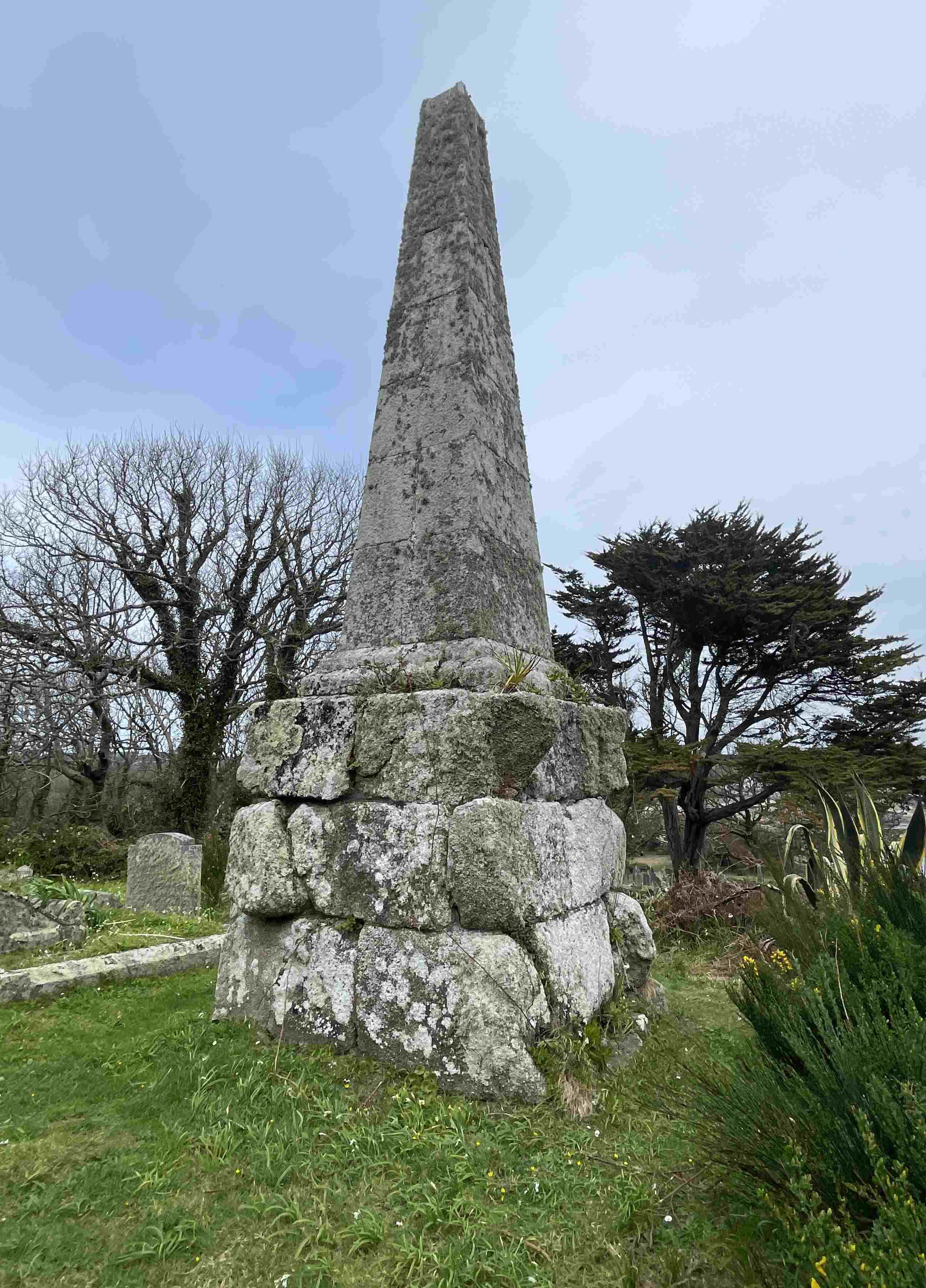
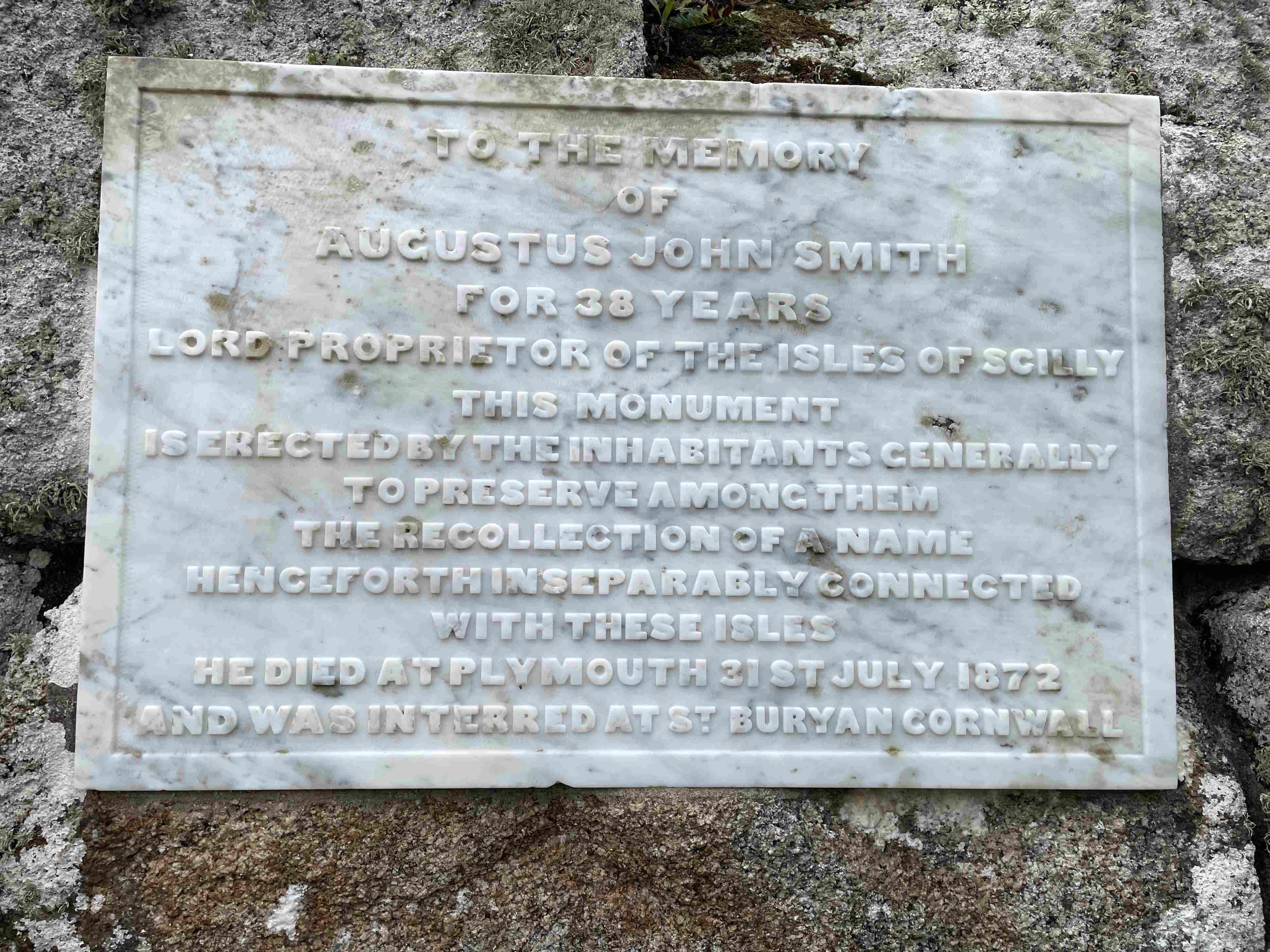
Augustus was not buried in either Scilly or Berkhamsted. This is the memorial in the old churchyard of St Mary’s, Scilly (which is also where Harold Wilson is buried).
Jenny, I'm really enjoying your posts. I never thought I'd be reading a series of articles on Berkhamsted Common, of all places, and finding them fascinating. There is so much depth in local history when you start diving in. Thank you!
Jenny, I didn't know what a complex character he was. You bring him to life so vividly. You made me smile when you noted that, were he alive today, he would be a menace in social media!